
Sacramento’s Biggest Housing Solution Lies Dormant In Our Backyards
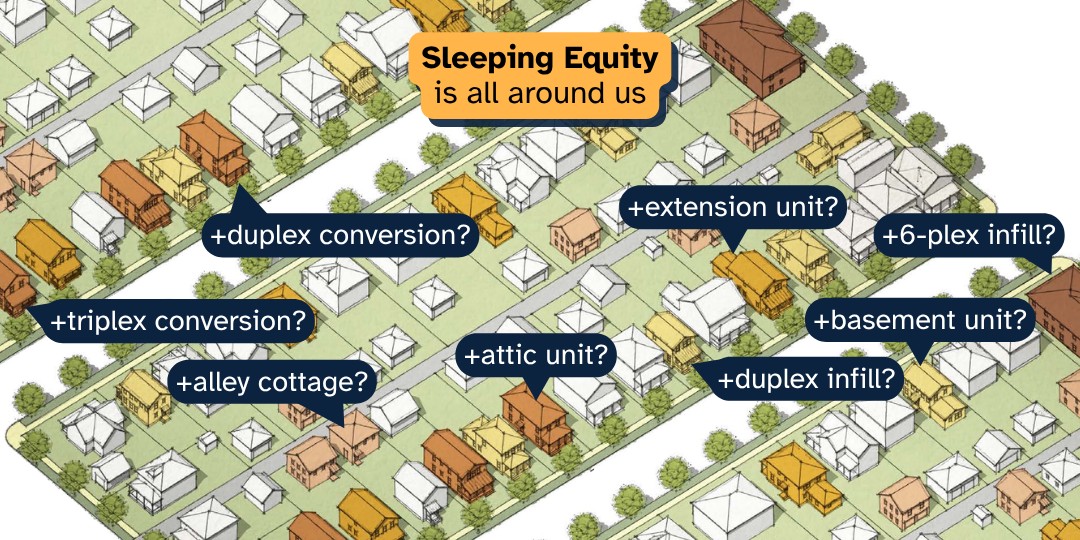
Sacramento’s housing strategy has long relied on two approaches: building new suburbs or large apartment complexes. Each has hit a wall—there aren’t enough vacant lots for large apartments alone, and new suburbs only create more fiscally insolvent infrastructure liabilities, a non-starter for cash-strapped Sacramento. There’s a third solution: break the spell on $25 billion of sleeping equity (the approximate value of underutilized backyards, garages, and spare rooms).
How? By reforming building codes and streamlining permitting for small projects, fostering a community of first-time developers, and using the City’s financial powers to guarantee small loans and issue municipal bonds for direct lending—thousands of small projects everywhere instead of a few mega-projects, without adding costly new infrastructure.
Where We Are Today
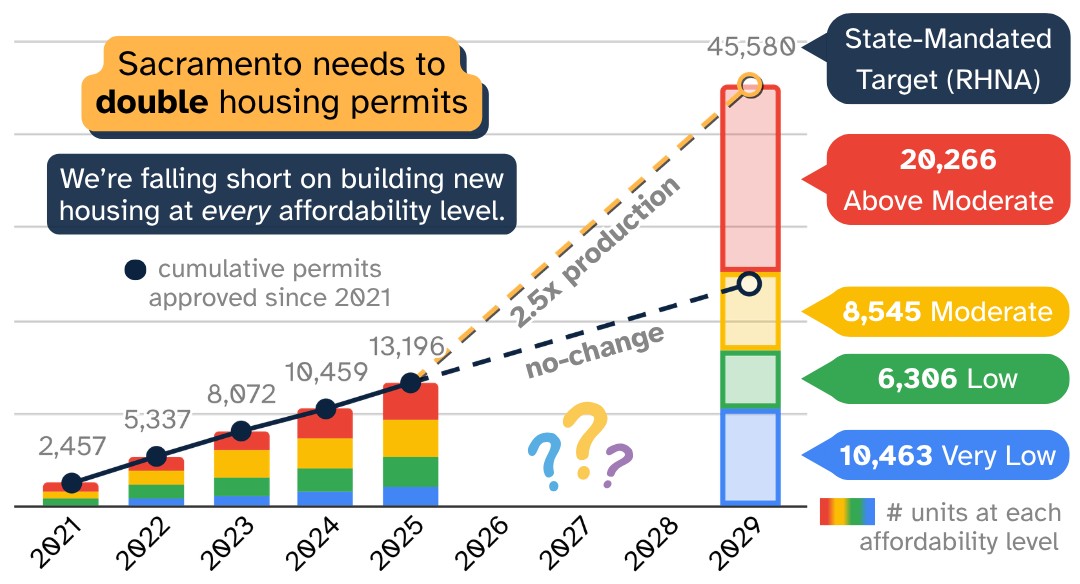
Sacramento needs to double its annual housing production from 2.5k to 6k units. The shortfall already hurts: half of renters and a third of homeowners spend over 30% of income on housing, and adjusted for local incomes, our rents exceed New York City’s. Homeowners on fixed incomes are squeezed too—rising insurance and maintenance costs threaten to push them out of the homes they’ve built their lives around. The city has skin in the game: California’s RHNA requires Sacramento to plan for 45,580 new homes by 2029, and missing the target risks loss of priority on state housing and transportation grants.
What is “Sleeping Equity”?
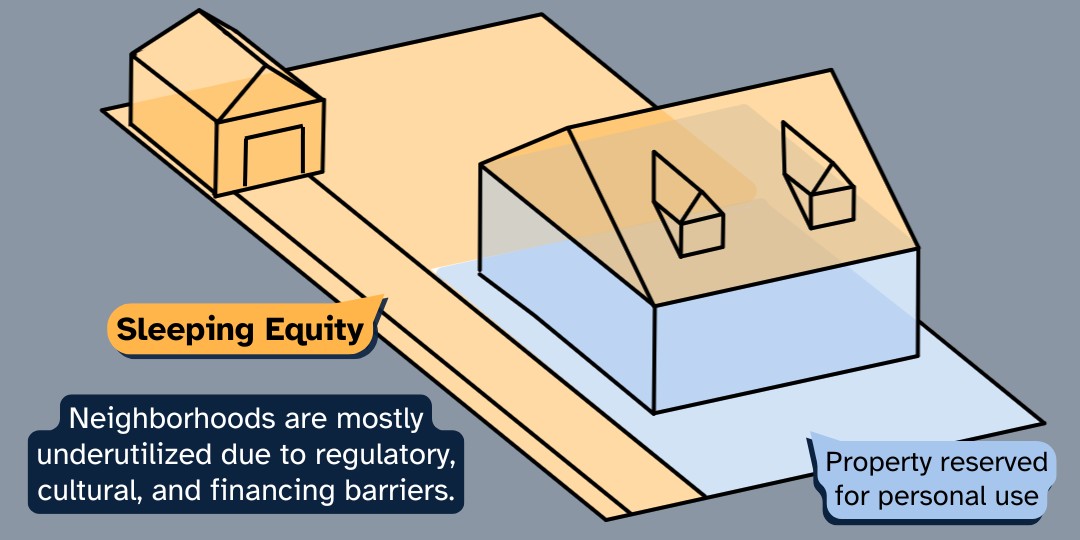
Sacramento homeowners sit on roughly $25 billion of mostly underutilized property equity—backyards, basements, attics, and spare rooms that could become housing (see Appendix A). For context, that’s comparable to the cost of subsidizing the construction of 195,000 affordable units conventionally. Even unlocking a fraction would meaningfully expand housing supply—while giving homeowners rental income and the option to age in place.
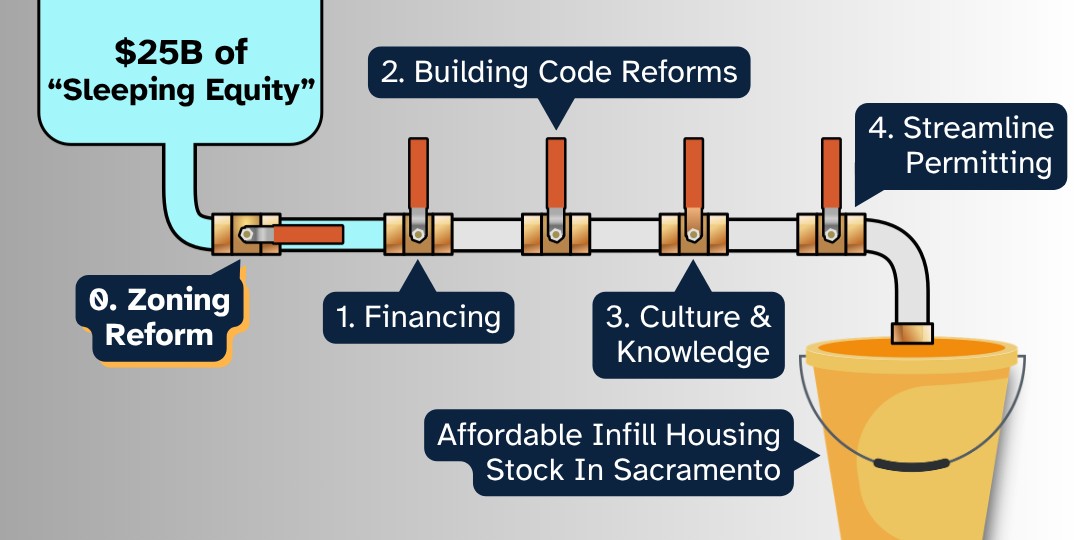
When the City adopted new zoning changes to legalize density citywide in 2024, it broke the first spell (restrictive zoning) keeping sleeping equity dormant, but several barriers remain: expensive building code requirements, complex permitting, lack of knowledge among first-time developers, and limited access to affordable financing.
1. Financing
Today, housing development is a struggle to pencil out because land is expensive, construction costs are high, and the margins are thin. But what if the developer didn’t have to buy the land because they already owned the land? Unlocking sleeping equity means eliminating land acquisition costs from thousands of potential housing projects.
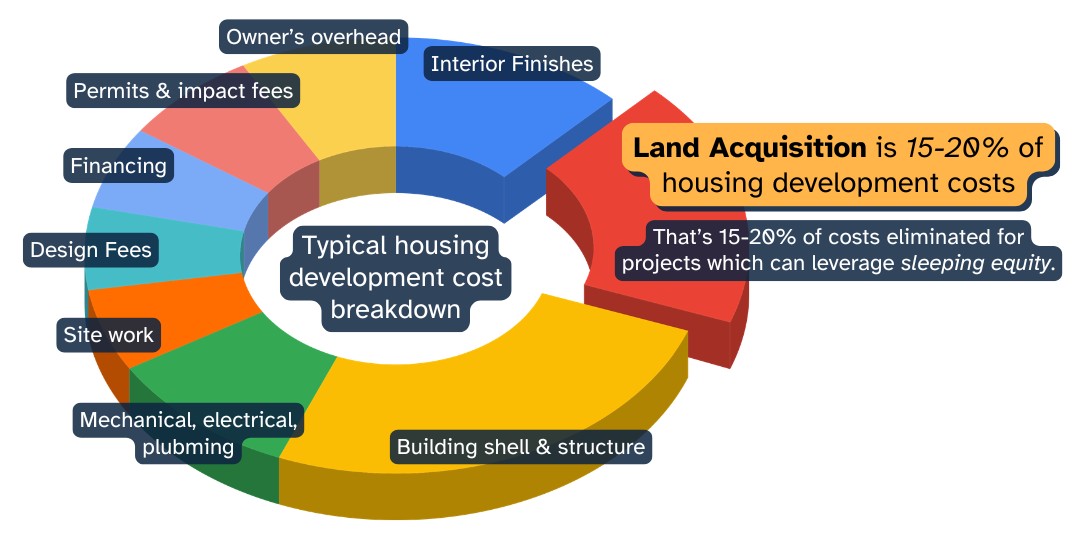
Unfortunately, lending markets and city fee structures weren’t designed for small projects like backyard cottages, but Sacramento can use its authority to fix that.
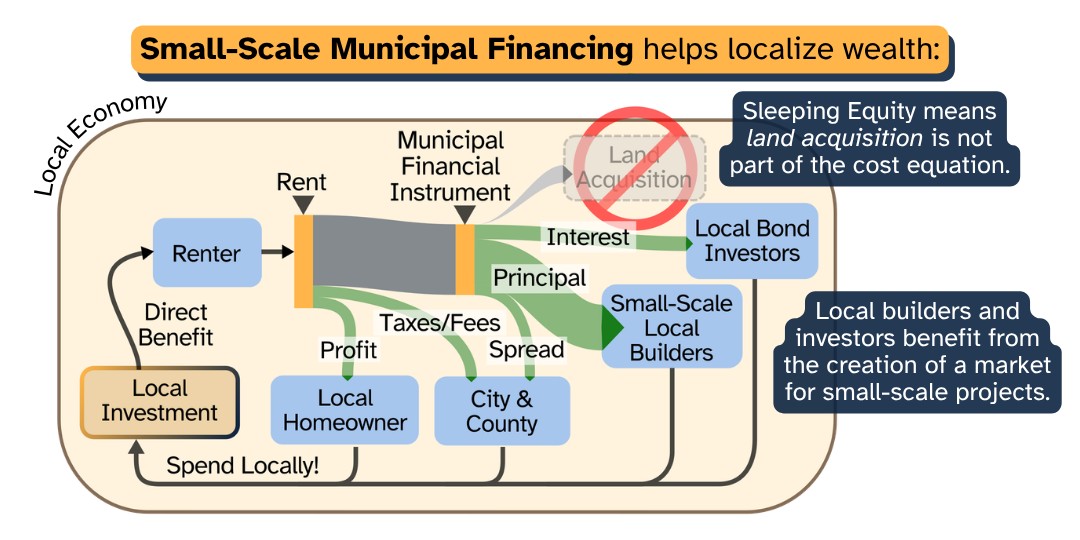
 Financing Strategy 1: Unlock lending with city-backed loans. A backyard cottage costs $150,000–$200,000—too small for most banks to bother with, so nearly two-thirds of California ADU homeowners pay out of pocket, and the financing barriers fall hardest on low-income and BIPOC homeowners. Sacramento can guarantee private construction loans for small infill projects, and issue municipal bonds to lend directly at ultra-low rates (every $12M in bonds finances ~100 ADUs—see Appendix B). San Diego already runs a similar program offering 4% interest over 15 years.
When cities borrow to extend infrastructure into new subdivisions, they perpetuate the Growth Ponzi Scheme—debt that never pays for itself. Borrowing to unlock housing on land already served by roads and sewers is the opposite: new units generate recurring tax revenue without adding new liabilities.
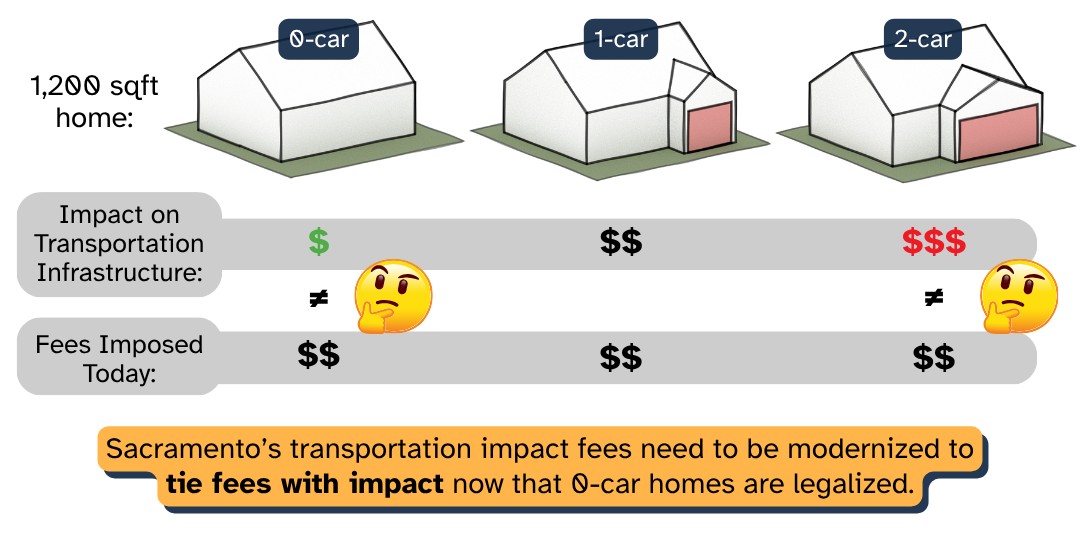
Financing Strategy 2: Right-size transportation impact fees. Sacramento already waives transportation impact fees for small ADUs under 750 sq ft, recognizing that parking availability is the strongest predictor of car ownership and cars are what burden roads. But after Sacramento eliminated parking mandates citywide in 2024, the fee structure didn’t follow—family-sized ADUs still pay $1,100+ and backyard fourplexes up to $12,000, even when projects add zero parking. The underlying nexus study dates to 2006 and assumes every household owns a car. The fix: tie fees to parking provided, not unit size.
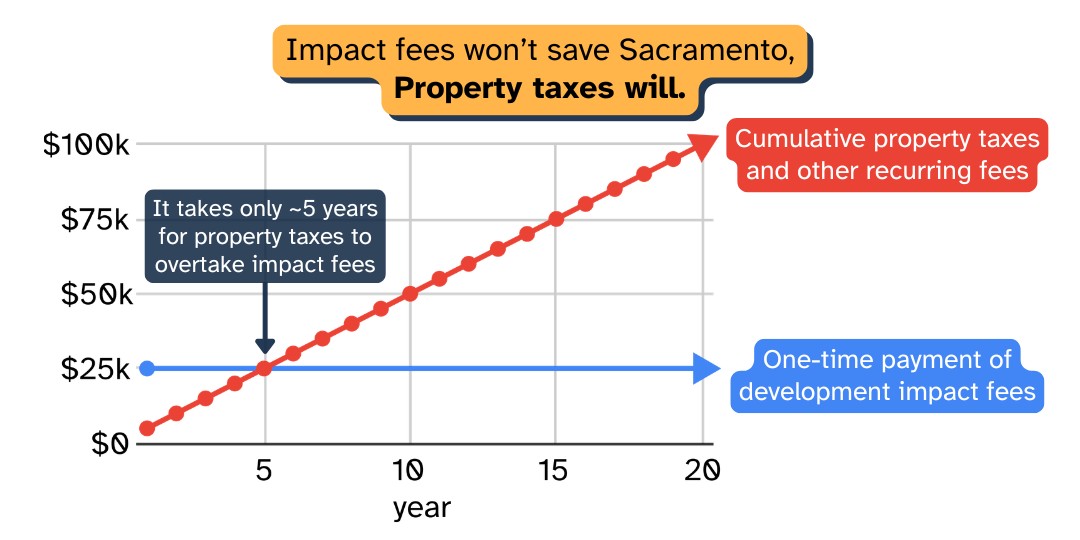
Financing Strategy 3: Defer impact fees for small projects. Impact fees on ADUs run $5k–$15k per unit—a barrier that often prevents the unit from being built at all. As Strong Towns argues, this is the “Impact Fee Illusion“: one-time fees fund construction of public facilities, not the maintenance that’s the real long-term cost. What actually pays for maintenance is recurring tax revenue, which only flows once the unit is built. Sacramento should let small projects spread fee payments over a few years to help secure that tax revenue.
2. Building Code Reform
Zoning codes are only half the battle. Building code barriers are at least as consequential as zoning or financial barriers, and they can treat small projects like large ones. The clearest example is the “3-unit cliff”—Sacramento now permits backyard triplexes and fourplexes, but the state building code classifies any building with three or more units as commercial, putting a small fourplex under the same code as a 40-unit tower and requiring engineered plans, commercial fire-rated assemblies, office-grade accessibility, and a far more expensive permitting path. The result: almost no one builds them.
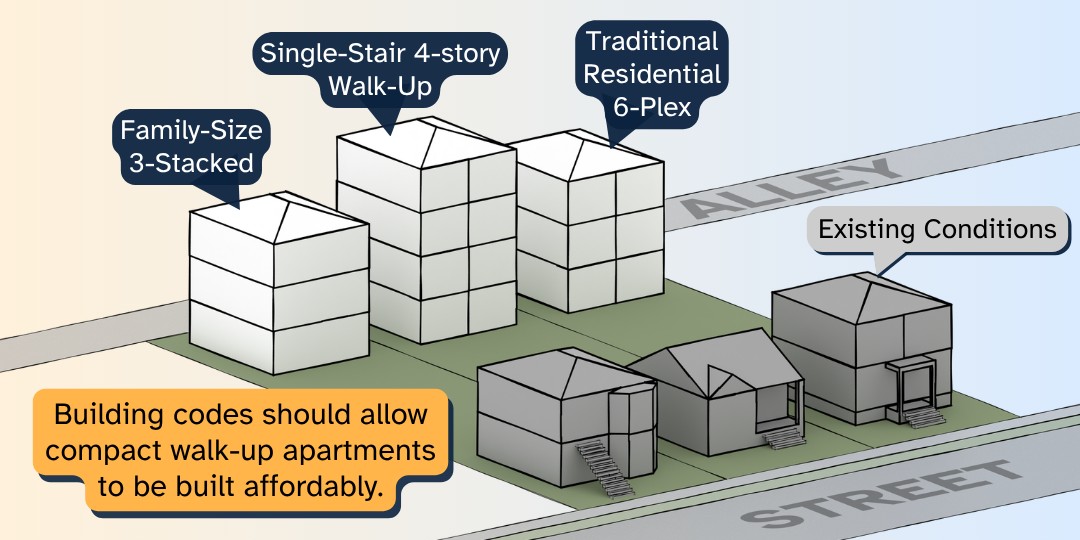
California’s constitution prohibits cities from making the building code less restrictive, so Sacramento can’t unilaterally fix this—but it isn’t powerless. It can invite the Incremental Development Alliance to run a “stress test” workshop documenting exactly where the code blocks small projects (in South Bend, one revealed 36 variances costing $12k just to rebuild seven houses on existing lots). It can use that evidence to lobby for AB 6, which would move triplexes and fourplexes back under residential codes. And it can prepare to permit single-stair four-story apartments on day one when AB 835 takes effect in 2028.
3. Culture & Knowledge
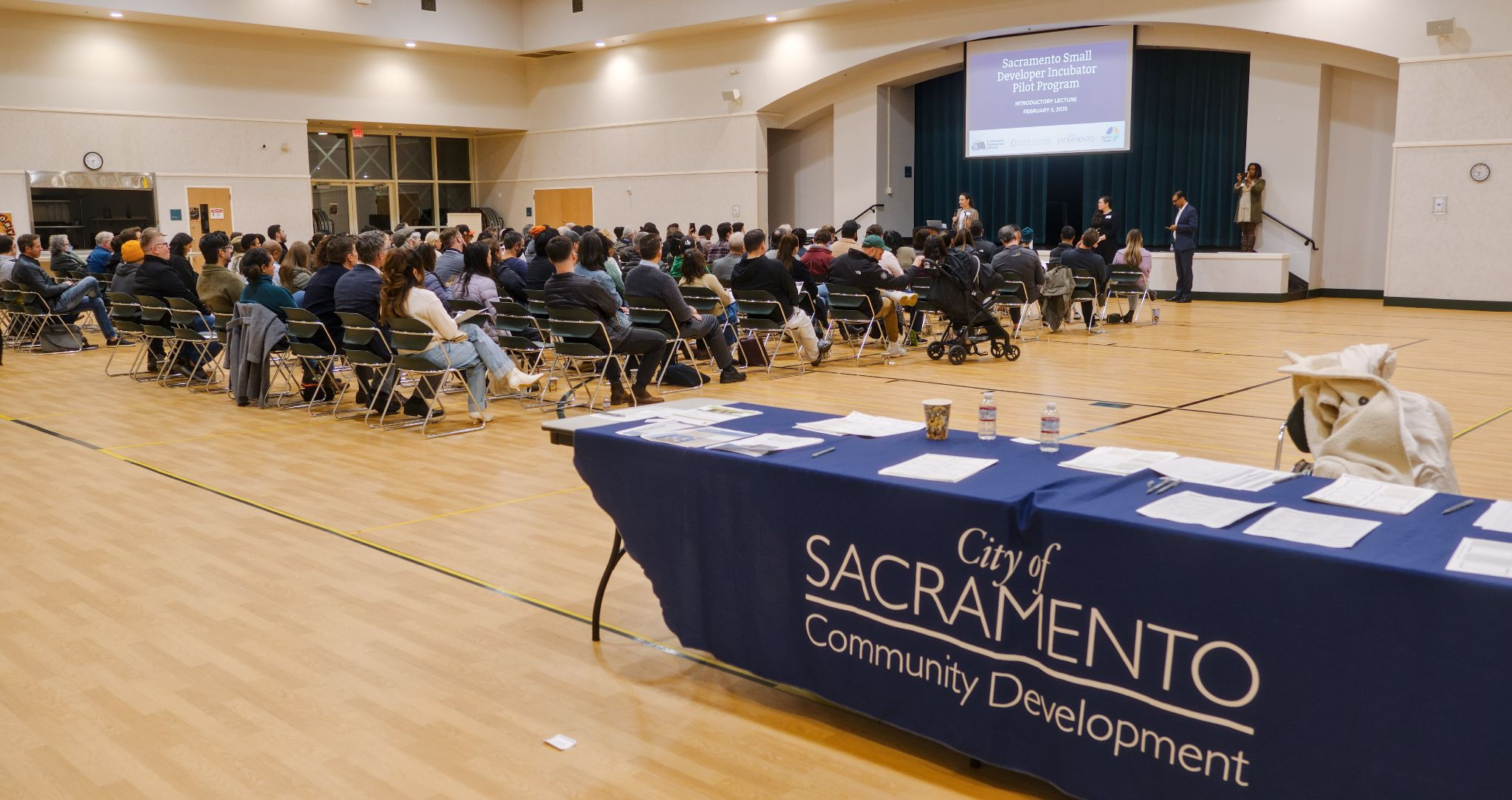
Sacramento’s Small Developer Incubator Program addresses the knowledge barrier through hands-on workshops, networking mixers, and quarterly “Small Developer Academies.” It’s a strong start, but South Bend’s experience shows training is just the beginning—durable results come from the ongoing ecosystem of mentorship and deal-sharing. To ensure long-term success, the City should plan for sustaining the program past its initial funding, track whether participants actually complete projects, and actively foster peer networks between graduates.
4. Streamlining Permitting
Permits can take months—both because of city review time and because applications are complex to prepare. Sacramento should aim for “24-hour approvals for straightforward projects like duplex conversions, backyard cottages, and starter homes.” That’s ambitious but achievable, and the City’s “Streamline Sacramento” initiative is already making progress: eliminating redundant plan review cycles, allowing in-field revisions, and offering virtual inspections. Two more high-leverage moves to consider:
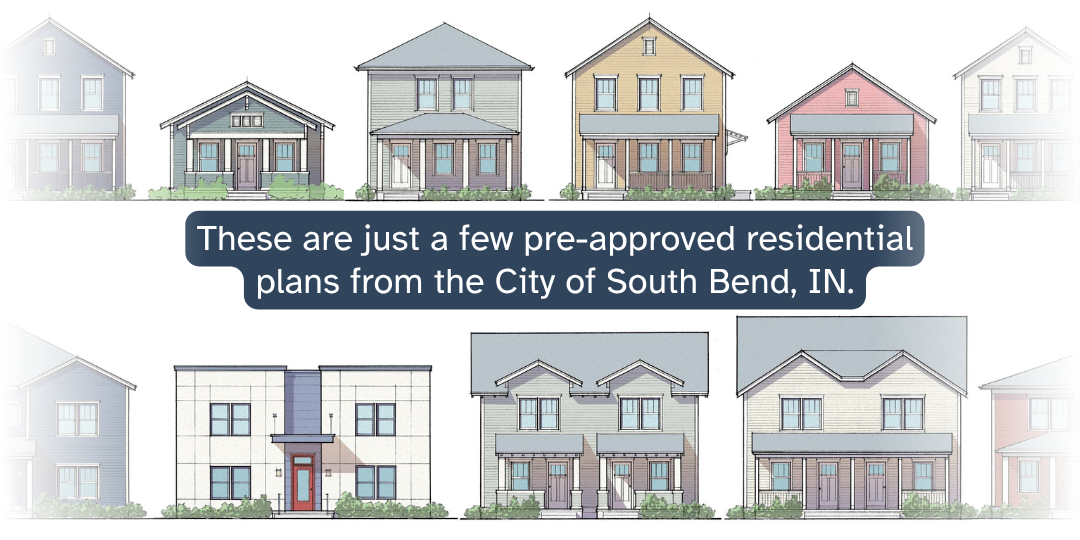
Pre-approved plan sets. Cities like Kalamazoo, South Bend, and Fayetteville offer libraries of dozens of ready-to-build small multiplex designs, while Los Angeles maintains over 80 pre-approved ADU plans—homeowners pick a plan from the catalog and skip plan review entirely. Sacramento offers only three ADU plans—the bare minimum.
Self-certification for the smallest projects. For garage and spare-room conversions, allow architects and engineers to self-certify their own plans—reducing staff burden where the risk is lowest.
Shared Benefits
Unlocking sleeping equity creates wealth-building opportunities across the community. Renters gain more housing options at lower price points; homeowners unlock rental income and the ability to age in place; local builders gain a steady pipeline of small projects; and community investors can participate in municipal bonds that keep wealth circulating locally rather than exporting returns to national institutions. Neighborhoods grow more walkable as infill replaces vacant lots, and the city raises its taxable value per acre without costly infrastructure expansion—helping Sacramento crawl out of its structural budget deficit. Unlike the all-or-nothing bets of suburban expansion, each project is small enough to course-correct along the way.
Appendices
Appendix A: Where does “$25 billion of sleeping equity” come from?
This is a back-of-envelope calculation meant to illustrate the scale of the opportunity, not a precise valuation. The precise number matters less than the core insight: there is an enormous pool of underutilized residential property across Sacramento’s established neighborhoods, and even unlocking a small fraction of it would meaningfully expand housing supply.
- The City of Sacramento has ~$72 billion of assessed property according to county tax rolls.
- 67% of all assessed property value is “Single Family Residences” or similar.
- Rough assumption: ⅓ of property value represents the “back yard” portion of the lot.
- Rough assumption: ⅙ of property value represents underutilized indoor spaces, including spare bedrooms, garages, attics, and basements.
- Finally, $72B × 67% × (⅓ + ⅙) = $24 billion
Appendix B: City-Financed Loans, Simulated
Renters, homeowners, investors, and the City can all profit from municipally financed affordable housing. This wasn’t feasible before the City adopted a new General Plan in 2024 that legalized density by allowing fourplexes citywide and eliminating parking mandates citywide. I’ve created a basic spreadsheet-based simulation which quantifies the benefits for each party:
https://docs.google.com/spreadsheets/d/1OUxjvo5TzyskRkKMc06cGQMOCW0swiEukh7zZwtGh3I/edit?usp=sharing
Renter benefit: Deed-restricted affordable rent for 80% AMI.
City benefit: $280k in tax revenue increments every 25 years for every 100 units financed.
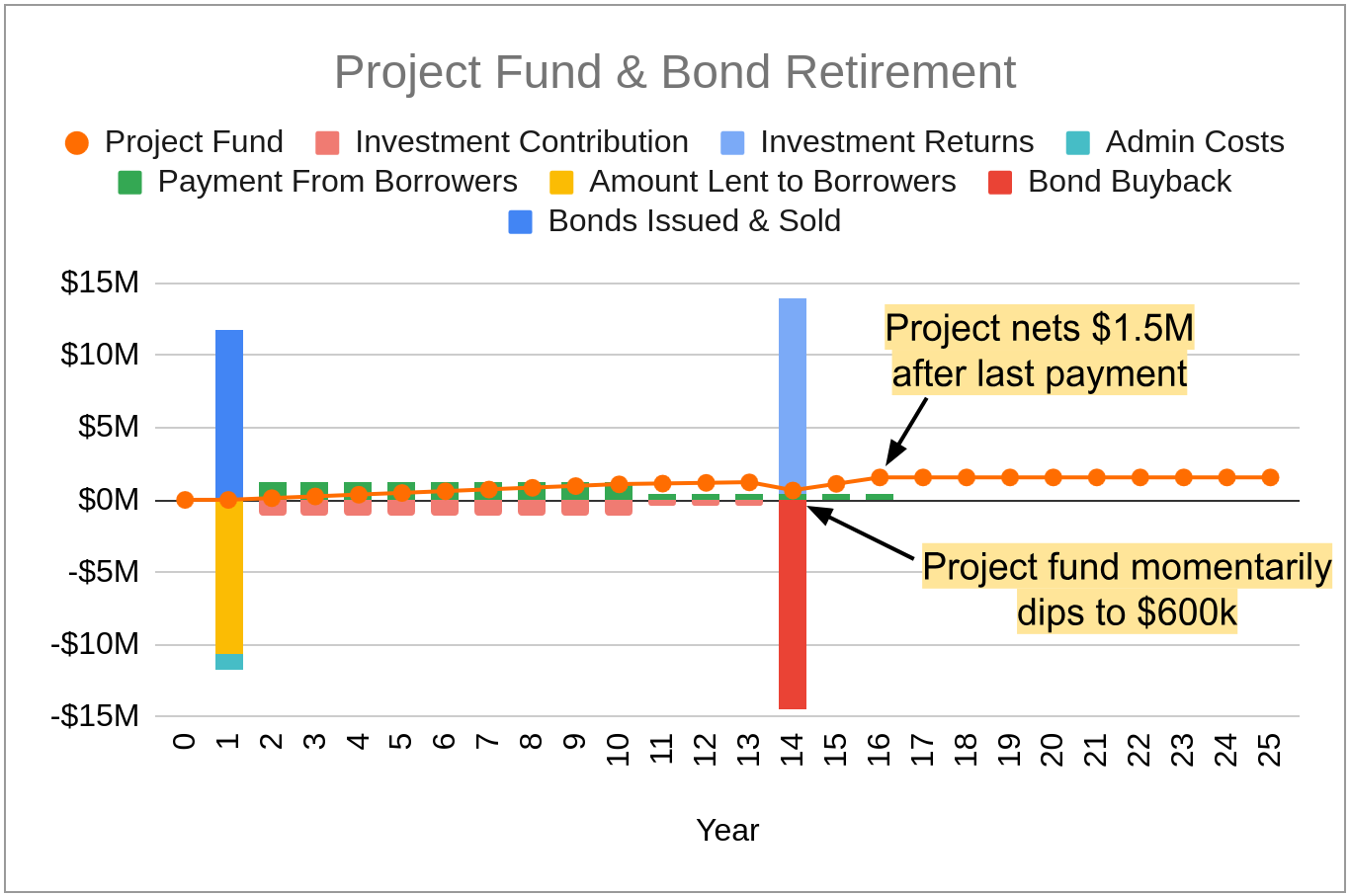
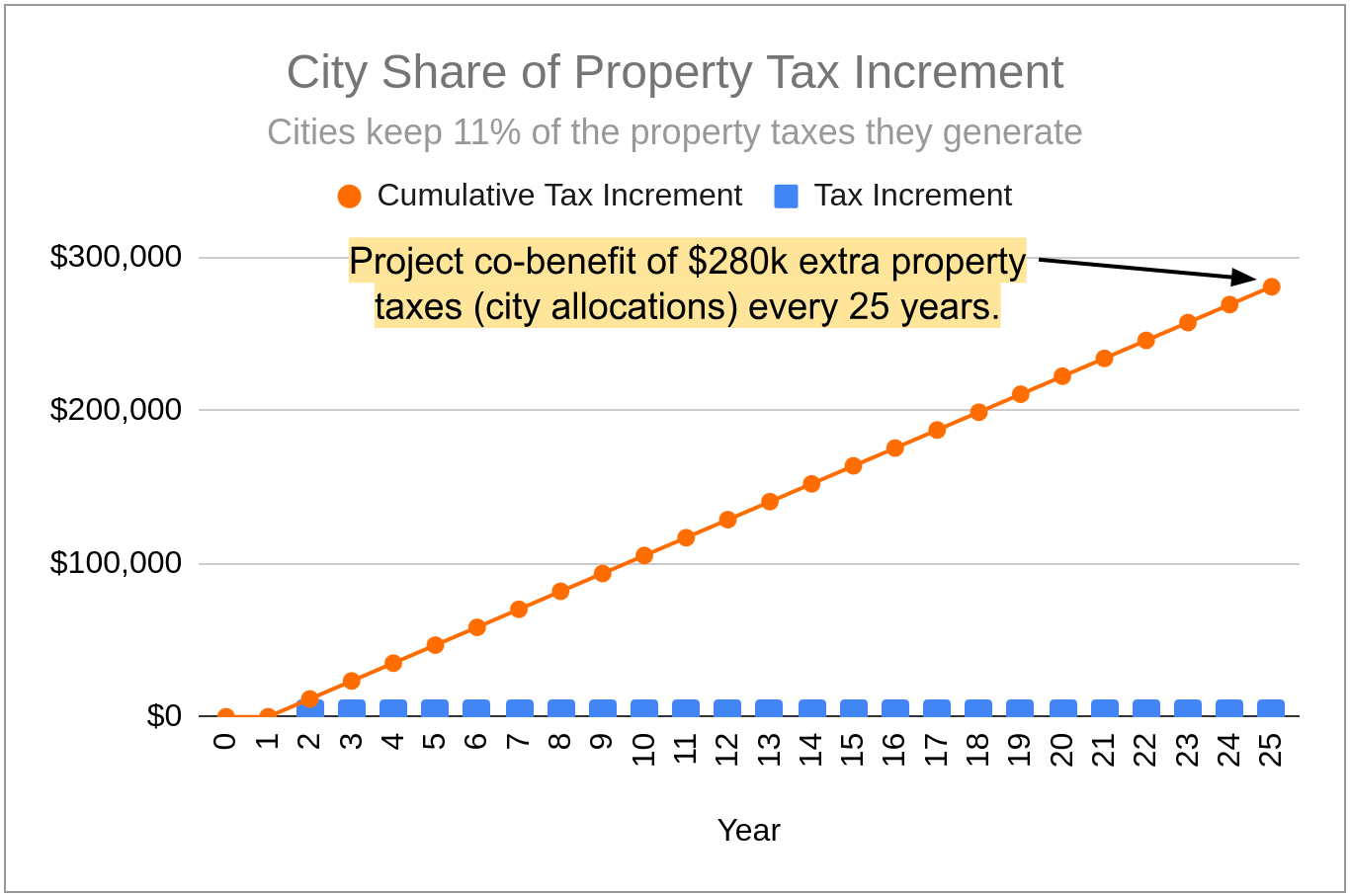
Borrower benefit: Zero down payment, and ~$500/mo profit immediately. ~$1500/mo profit after 10-15 years once the loan is retired.
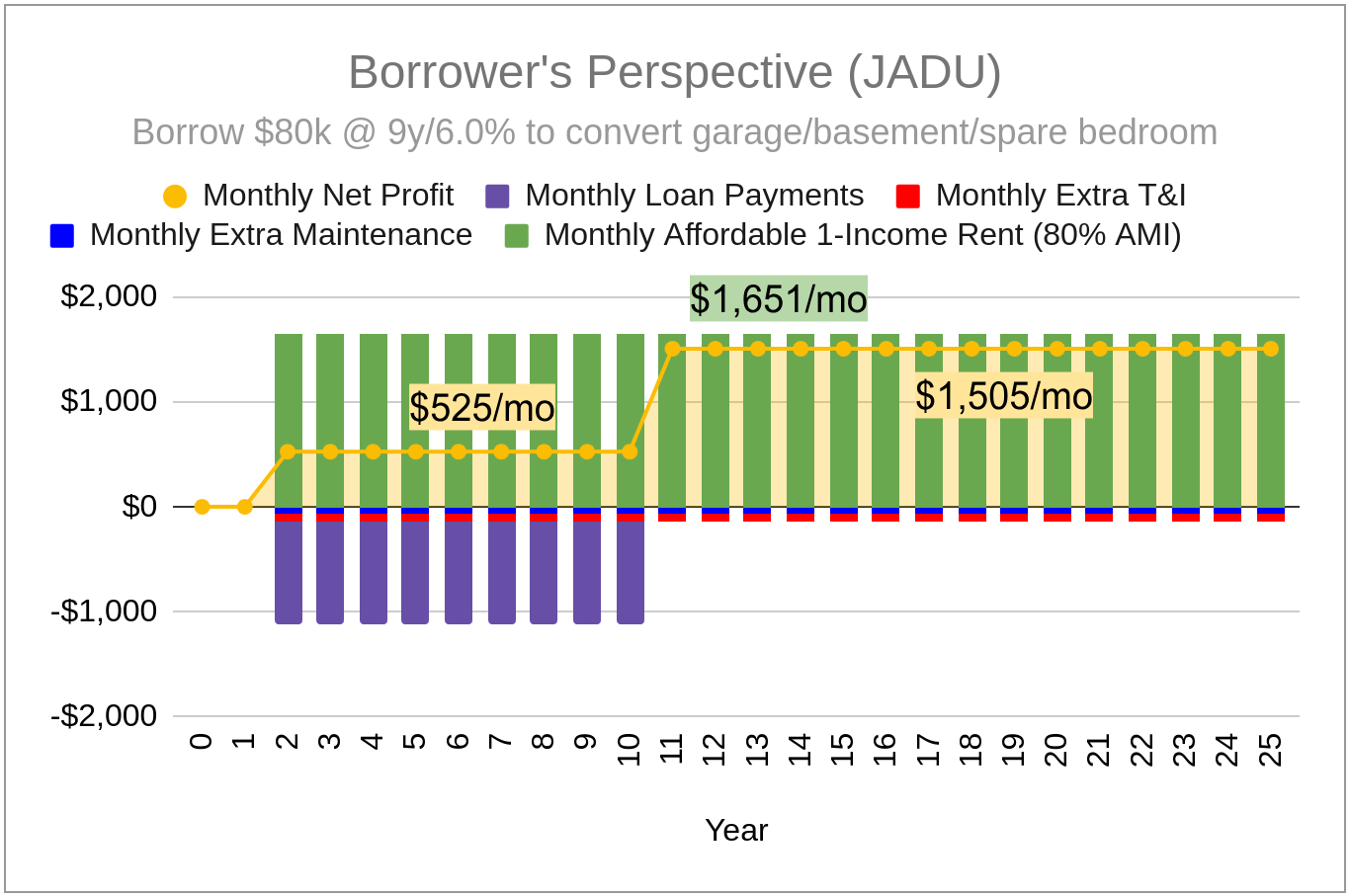
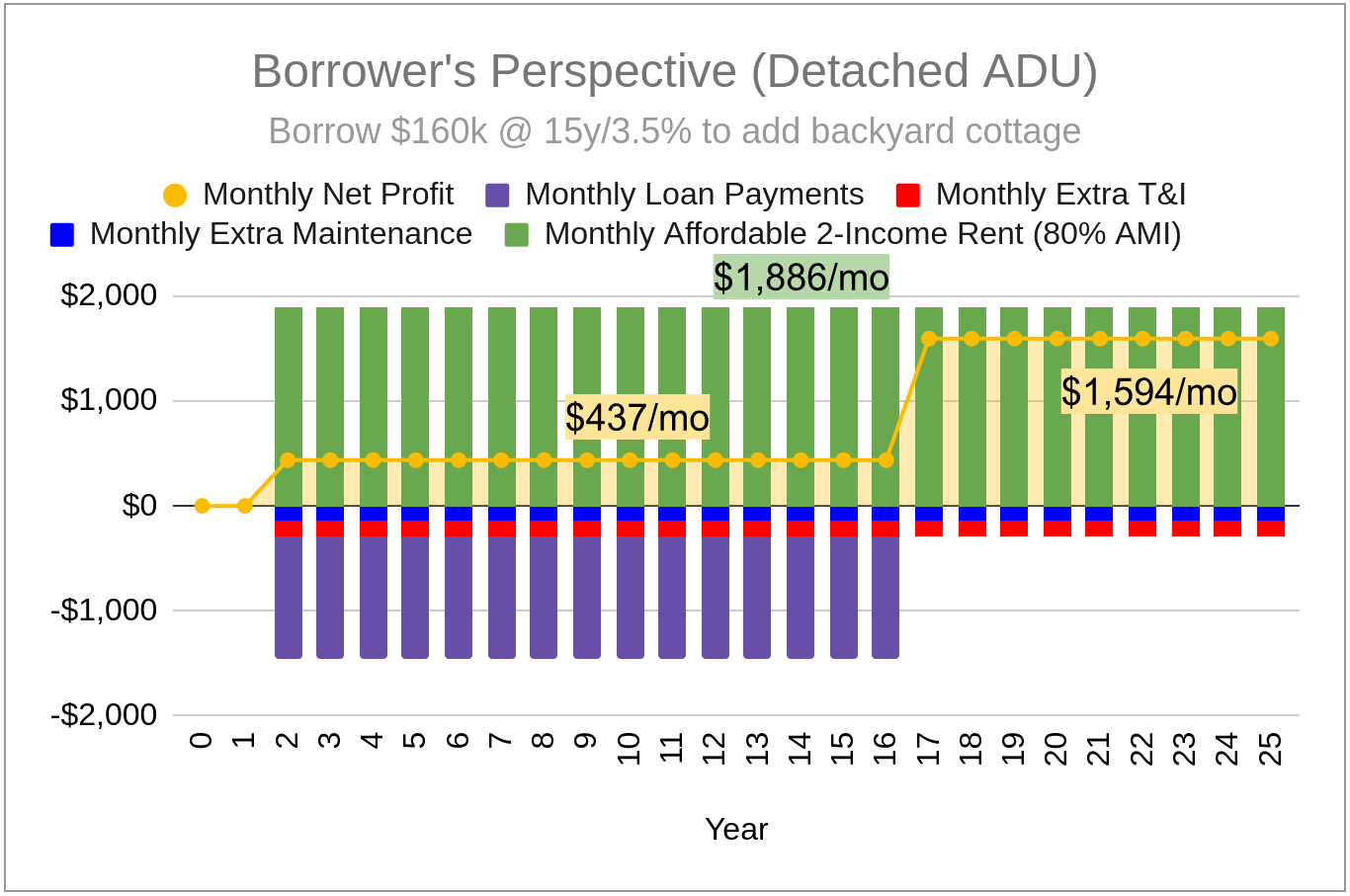
These projections assume imperfect conditions (3% loan default rate). Actual results will vary. The simulation is meant to illustrate the general structure of how municipal borrowing can fuel small development projects without losing money, not to guarantee specific returns.