
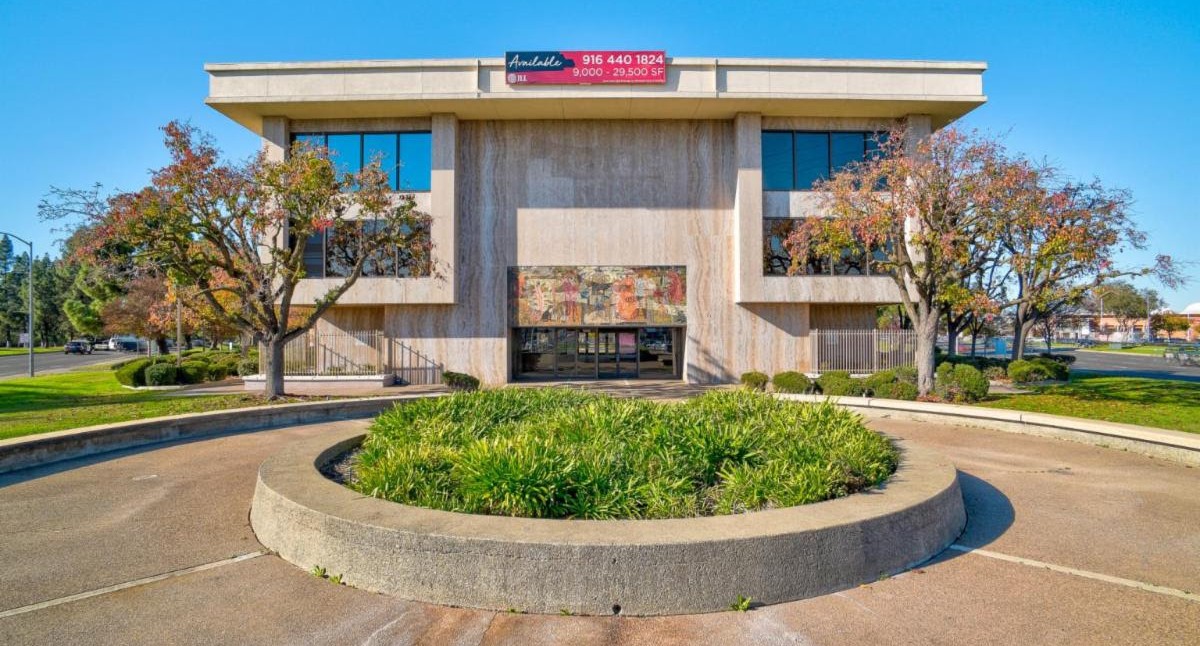
Designed by Millard Sheets’ studio in the late 1970s, the marble-clad bank building at Arden Way and Exposition Boulevard is an architectural and cultural anchor for the neighborhood. This artistically designed facility even carries mosaics telling the region’s history prior to European settlement. Traditional, incremental development builds on solid anchors like this, adapting them for each new generation and growing the neighborhood around it.
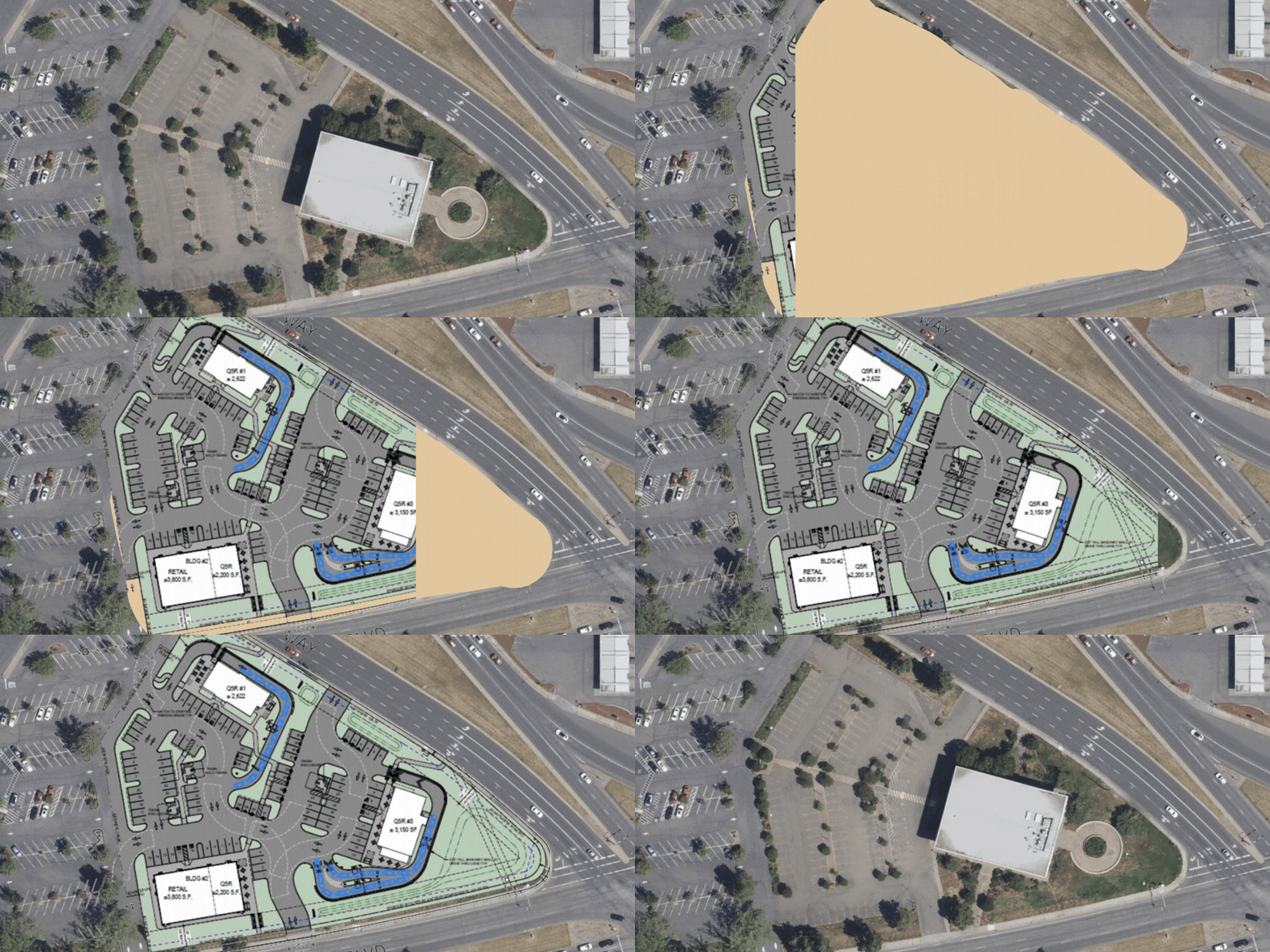
Preservation Sacramento alerted us to a plan to tear it down for two drive-throughs and two acres of parking. More drive-throughs keep Sacramentans dependent on cars, cut driveways across sidewalks, and use up land near bus stops. Sacramento already struggles to maintain its streets and pipes, but a site that’s mostly pavement pays only a fraction of the taxes needed for that maintenance. Meanwhile, the City’s own plans call for a walkable, mixed-use Arden Way served by light rail and frequent buses, aim to cut how much we drive, and treat demolishing historic buildings as a last resort.
Your taxes, neighborhood history, sense of place, health, climate, and even social life will all suffer to help subsidize a drive-through in Arden.
Follow the incentives
Imagine you are the owner of 1950 Arden Way. After years of trying to lease the building, you’re really feeling the pressure of this money pit of a property. What does Sacramento offer as a way forward?
| Drive-throughs are easy | Small, incremental projects are hard |
|---|---|
| Strip malls and drive-throughs are easy to permit. | Reusing an old building can trigger costly building code upgrades. |
| The City builds and maintains wide, fast roads that deliver driving customers. | Those same roads make walking or living nearby unpleasant. |
| National lenders are familiar with national chains and cookie-cutter strip malls. | So few small projects get built that loan products don’t yet exist for them. |
| Taxes stay low on land that’s mostly parking. | Subdividing lots and small projects are punished with disproportionately steep fees. |
Is it any wonder the highest bid came from a drive-through developer? Preservationists, environmentalists, and safe streets advocates are fighting an uphill battle when drive-throughs are systematically incentivized.
Together these incentives (and disincentives) are what we call the Suburban Experiment—a failed experiment in designing our cities around cars and building infrastructure we can’t afford to maintain.
Tipping the scales
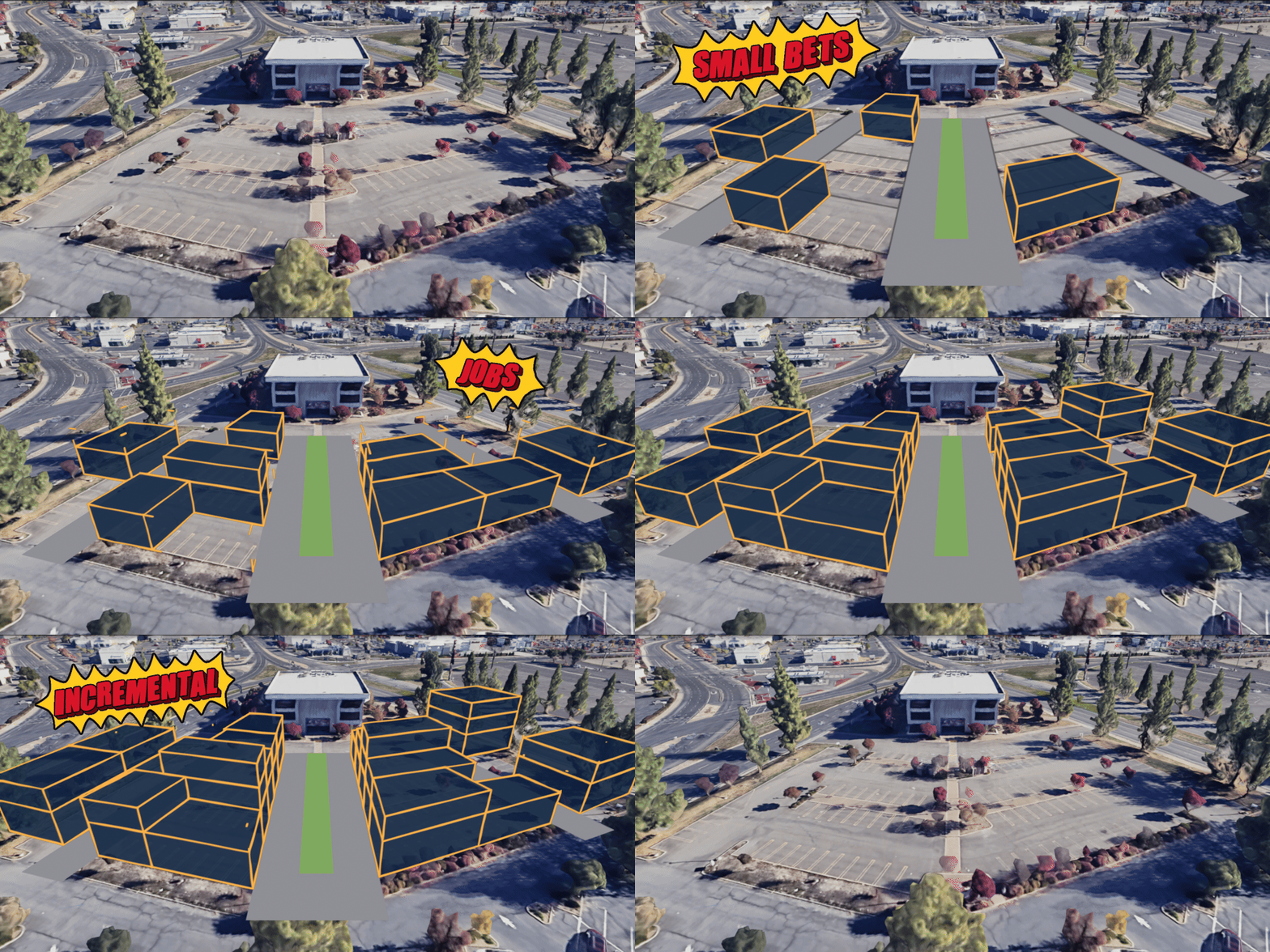
As we proposed in Sleeping Equity, the City of Sacramento can offer tools to help small, local developers build incrementally. It can back loans for small projects, push for building code reform, streamline permitting, defer impact fees, relax zoning, and shrink oversized roads.
These actions can systematically tip the scales toward incremental development and start healing our city’s wounds from the failed suburban experiment.
Get involved
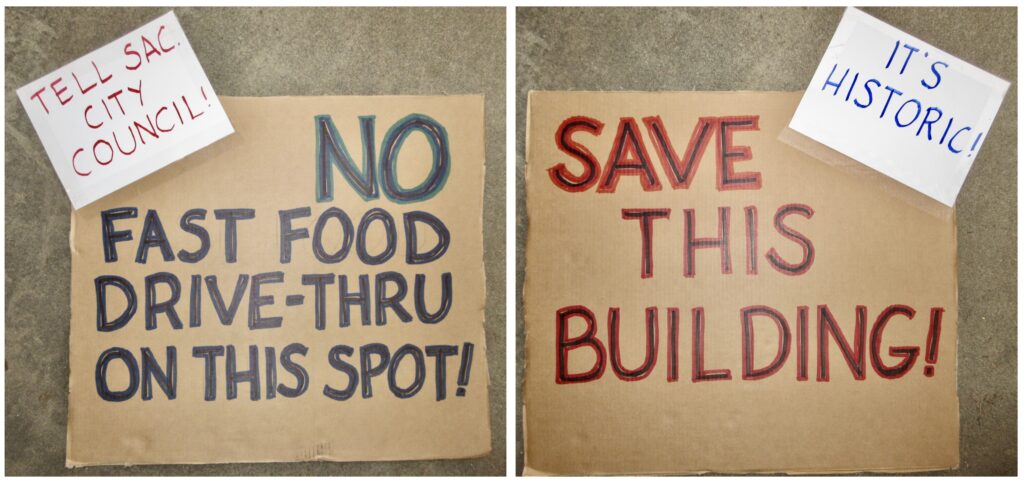
Join Preservation Sacramento this Black Friday, November 27, noon to 1 p.m., at Arden Way and Exposition Boulevard to help hold signs and get the word out. They’ve also appealed the demolition to the City Council (no hearing date yet).
Also, stay tuned for more opportunities to help tip the scales towards incremental development: