
On June 25, 2026, the City of Sacramento gave the public its first real look at how it plans to rewrite the zoning code to comply with the 2040 General Plan. Some of it is genuinely worth celebrating: more housing, and the long-awaited return of the corner store. Some of it deserves a harder look. Here’s what we saw, and what we think still needs work.
From the General Plan to the zoning code
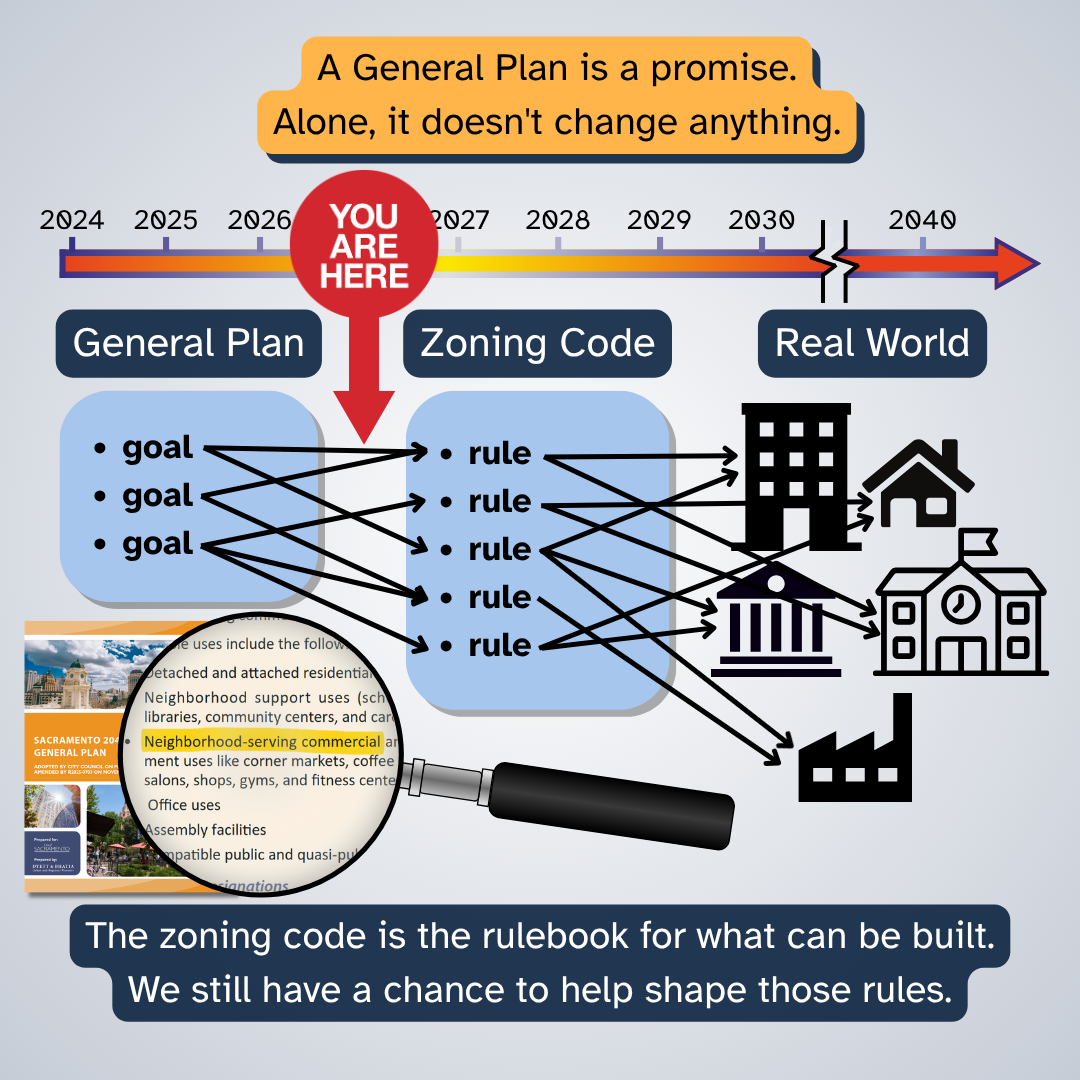
When Sacramento adopted its 2040 General Plan two years ago, it made big promises: more housing, more walkable neighborhoods, more options for getting around without a car. But a General Plan is a vision document. Alone, it doesn’t change what you’re allowed to build. That happens by updating the zoning code—the detailed rulebook that decides how tall, how wide, how close to the street, and what uses are permitted. This year, the zoning code will be rewritten to match the plan, and once again we have a chance to make a difference.
The “Bulk Tent” Is Gone
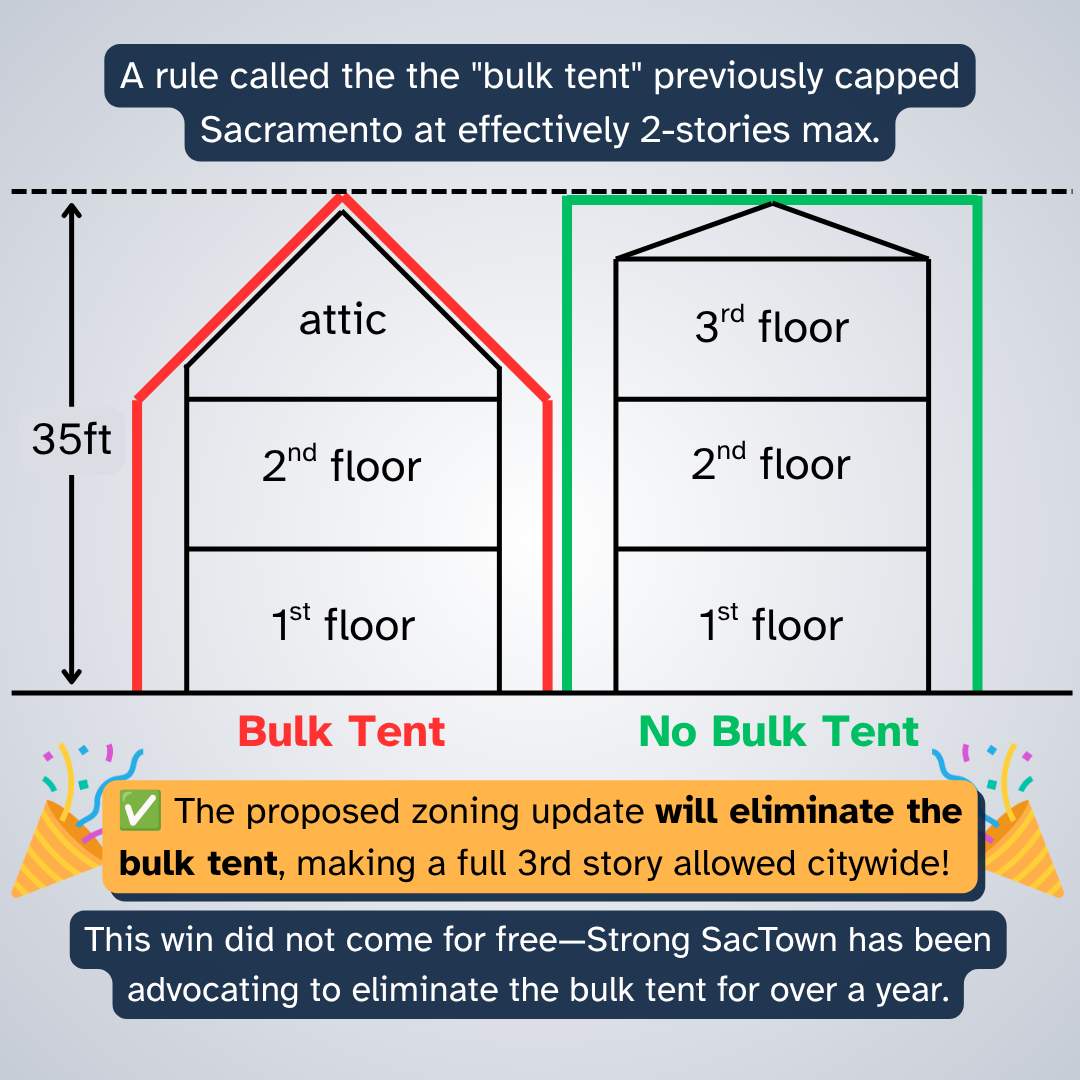
The biggest cheer of the meeting came when staff proposed eliminating a rule most people have never heard of: the bulk tent. It was an invisible angled ceiling that sloped towards the property lines, shaving the upper corners off a third floor. In practice that capped most of the city at two stories. Now that the bulk tent is gone, that makes a full third story buildable by-right citywide, and in some zones even a fourth story becomes possible.
This wasn’t a gift from staff—it was the unanimous direction of the City Council, and the Council got there because we showed up. Over the last year, Strong SacTown members came out to Planning Commission and City Council meetings to comment while bulk controls were still being debated. This is proof that public comment changes outcomes.
Geometry for Walkability
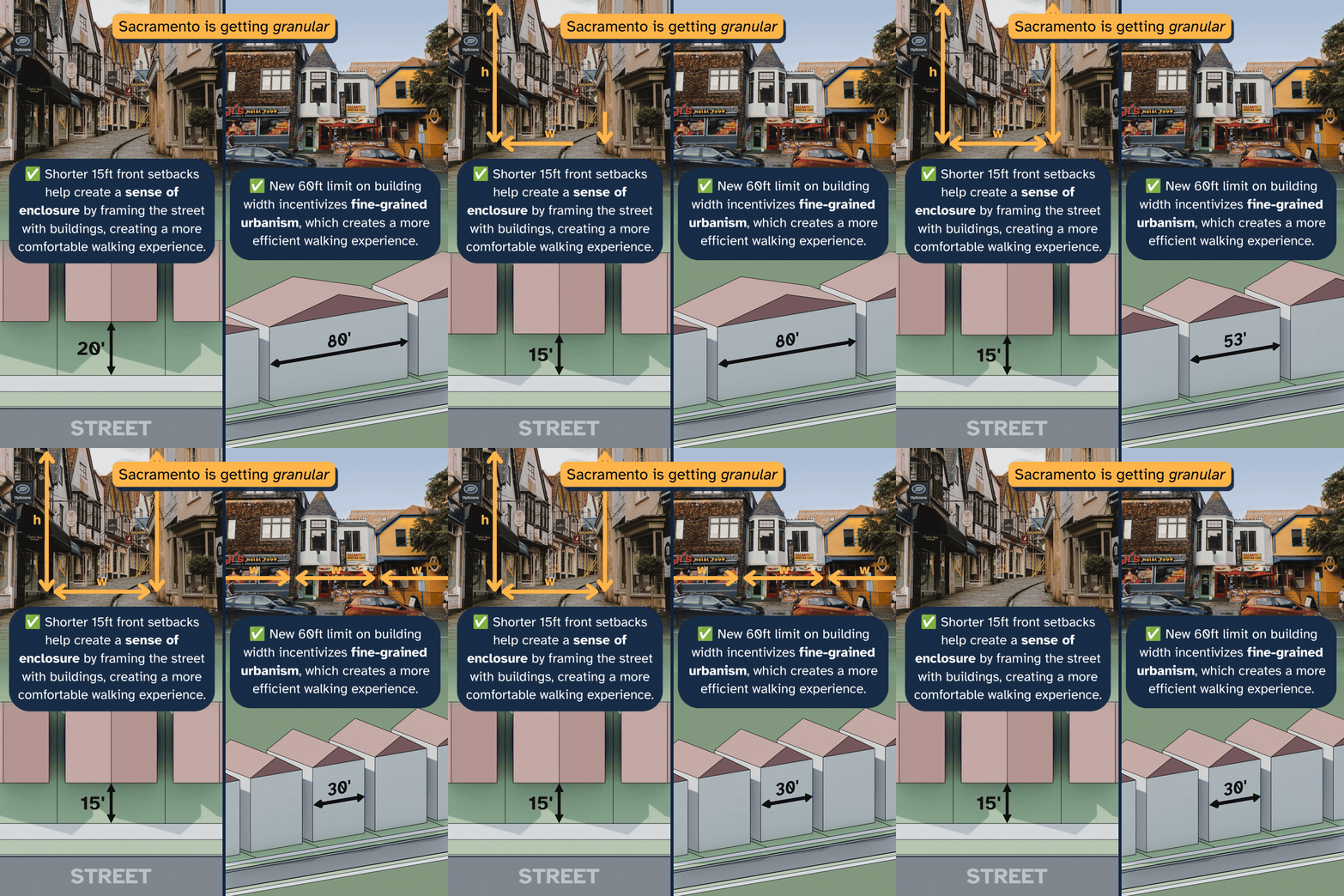
The proposal is also more permissive about building geometry. The front-yard setback becomes a flat 15 feet, no longer deepened by what neighboring lots do, and new 60ft caps on building width and depth are introduced citywide. Together, they quietly nudge Sacramento toward being more walkable, through a sense of enclosure and more fine-grained urbanism:
- Sense of Enclosure: A shorter front setback brings buildings closer to the sidewalk, framing the street like an outdoor room. That sense of enclosure is what makes walking feel comfortable and human-scale. Every year, millions of walking-starved Americans travel to Europe or Disney Land just to feel it.
- Fine-grained urbanism: The 60ft width and depth caps signal that new development should be fine-grained: a pattern that makes walking more efficient, enables more small projects built by many hands, and lets a neighborhood become financially resilient. A house-scale cap also makes a reform like this politically viable by appealing to skeptical neighbors who say they’re afraid of density but are actually afraid of massive buildings. And it keeps developers building UP rather than sprawling OUT, which we now know balloons a city’s maintenance backlog.
The Corner Store Comeback
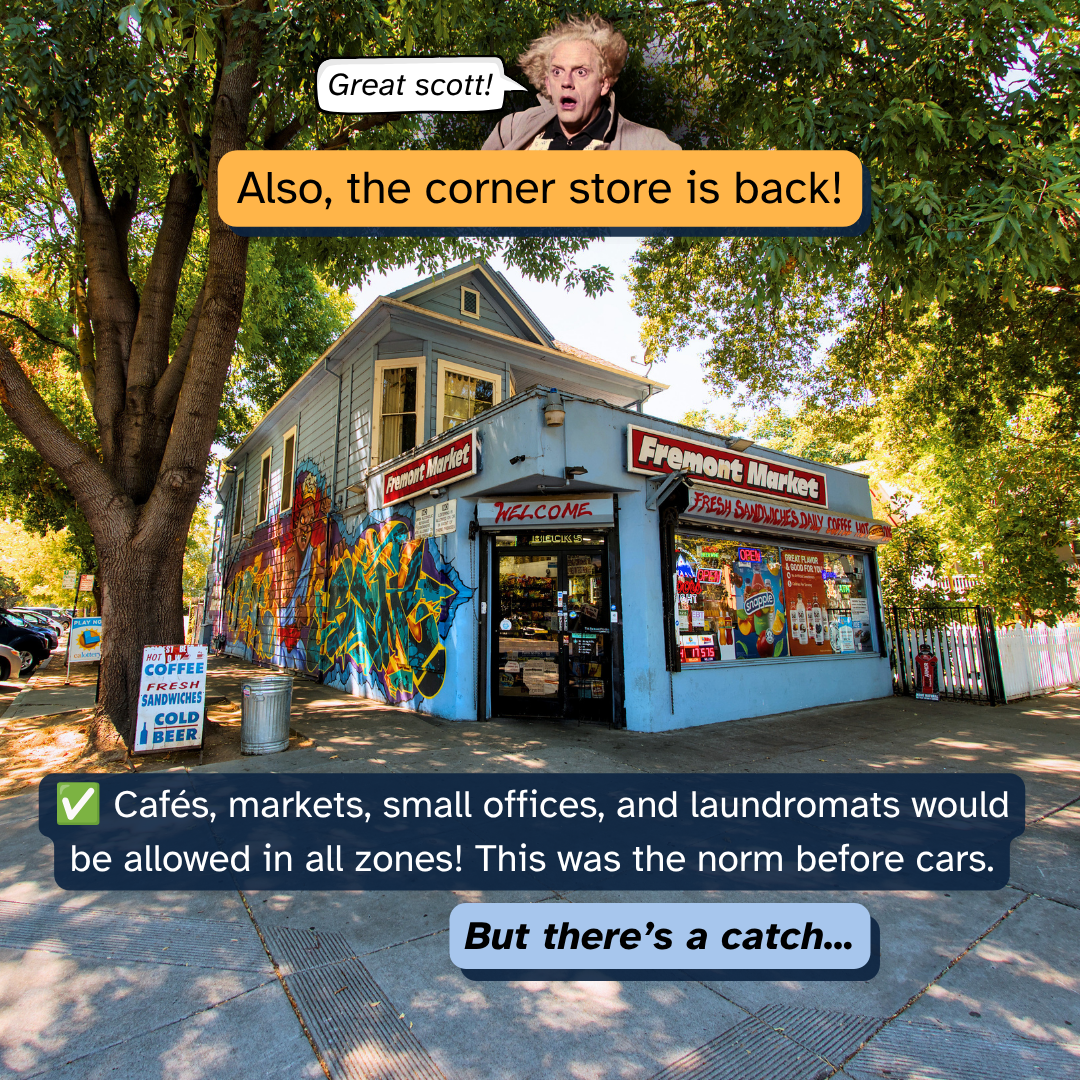
The proposal would allow “neighborhood commercial” uses inside residential zones for the first time in generations. We’re talking about small groceries, neighborhood cafés, small offices, fitness studios, laundromats, little libraries, etc. It’s the pattern almost every older Sacramento neighborhood was built on, before zoning made it illegal and forced every errand into a car trip. Bringing these uses back means more of the things you need within a short walk, more small businesses owned by your neighbors, and more taxes generated without expanding maintenance liabilities. The catch is in exactly where, and on which lots, the city would actually allow it.
The catch…
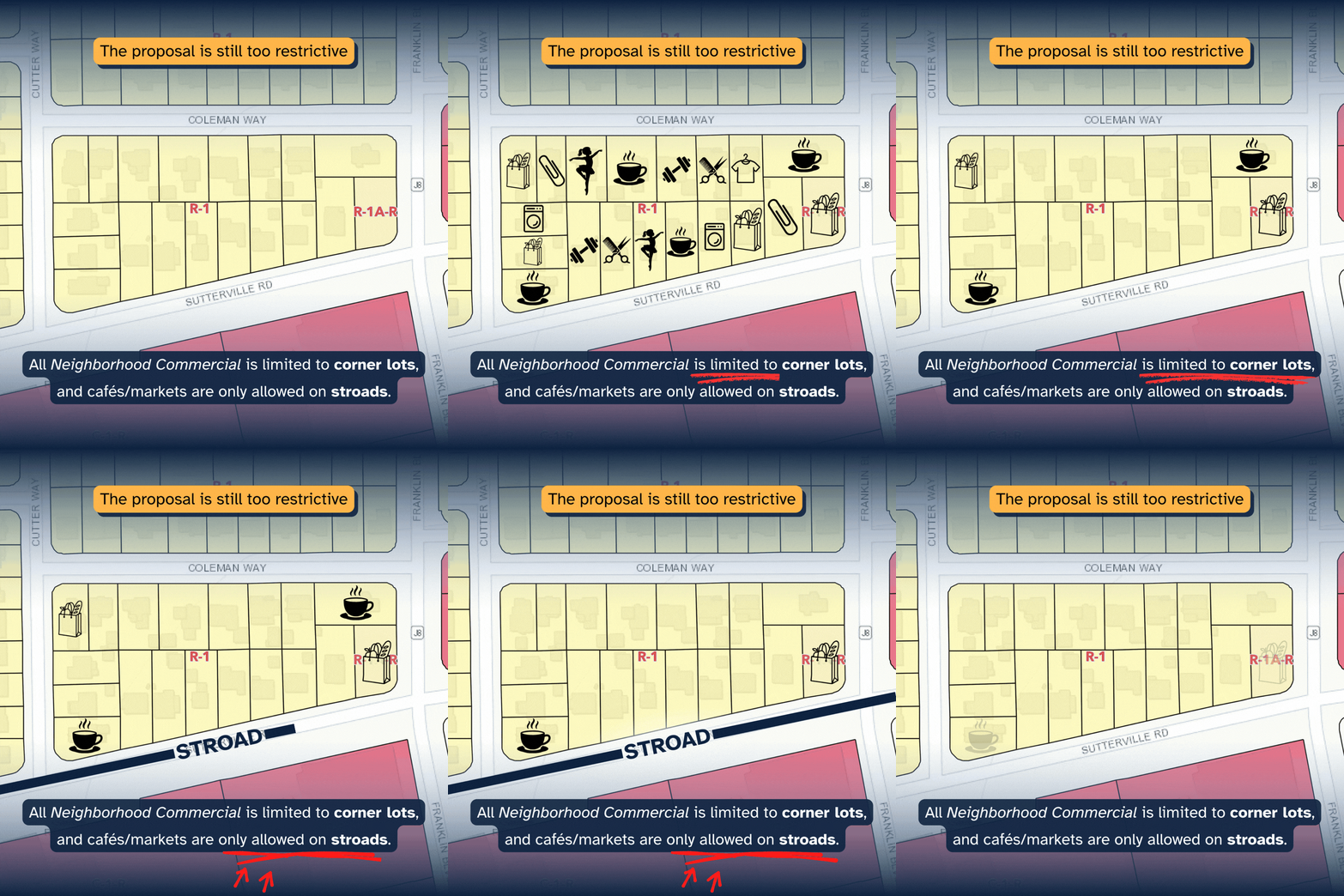
The proposed changes wouldn’t allow neighborhood commercial anywhere, only on corner lots. Additionally, cafés/markets would only be allowed on arterials and collectors (a.k.a. Stroads). So mixed-use development is coming back, but the menu of what’s allowed depends heavily on several arbitrary rules.
Who Wins?
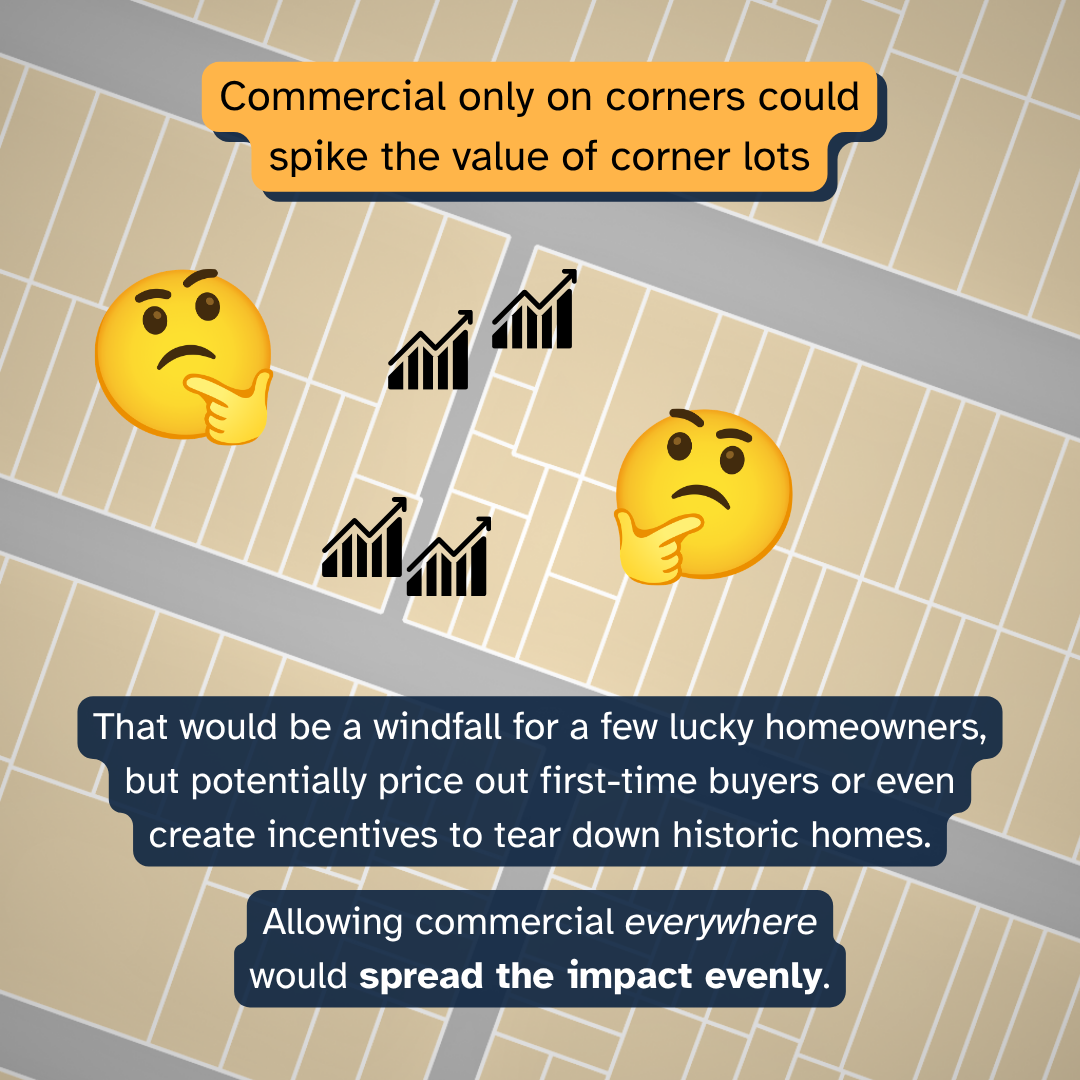
If commercial uses are allowed only on corner lots, the value of those specific lots could jump up overnight. That’s an arbitrary windfall for a small set of lucky owners—and it could push corner homes further out of reach for first-time buyers. A large enough spike in value could even encourage owners to demolish historic homes if not carefully prevented by planning staff. Allowing neighborhood commercial more broadly would spread the opportunity (and burden) around more evenly.
The real reason you can’t have Cafés
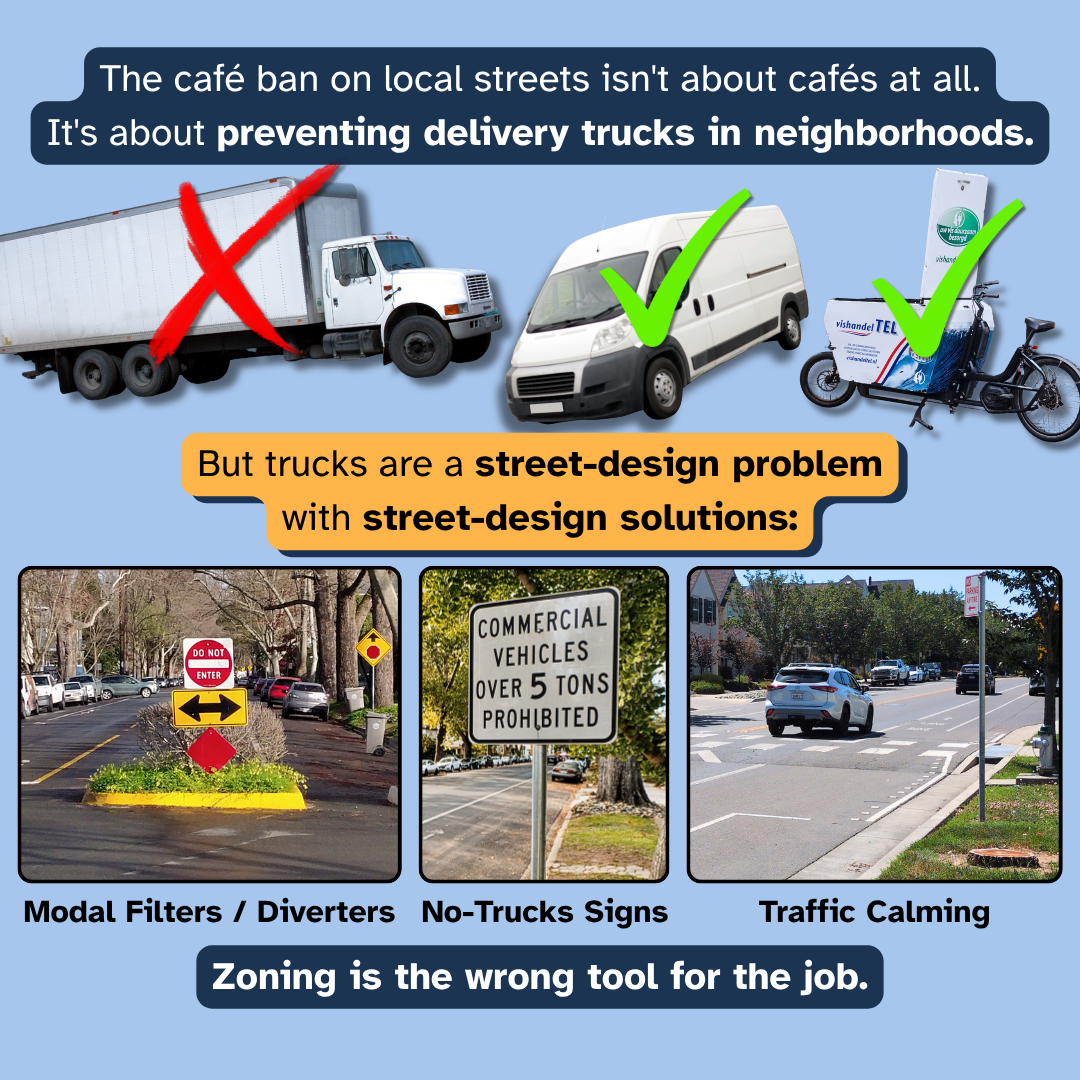
The City’s proposal to ban cafés and small markets on local streets is based on a concern that they would delivery-truck traffic into quiet residential neighborhoods. We share that concern—nobody wants semis rumbling past our homes. But using the zoning code to manage truck traffic is the wrong tool for the job.
Truck traffic is a street-design problem, and DPW has tools at their disposal: no-truck signs, modal filters, diverters, and neckdowns, all of which can be deployed using quick-build materials and funding. By declining to use those low-cost tools to create no-truck or low-truck zones, DPW effectively handed the problem to the planning department to solve by banning cafés and small markets where they could benefit neighborhoods the most.
Let the market find the market
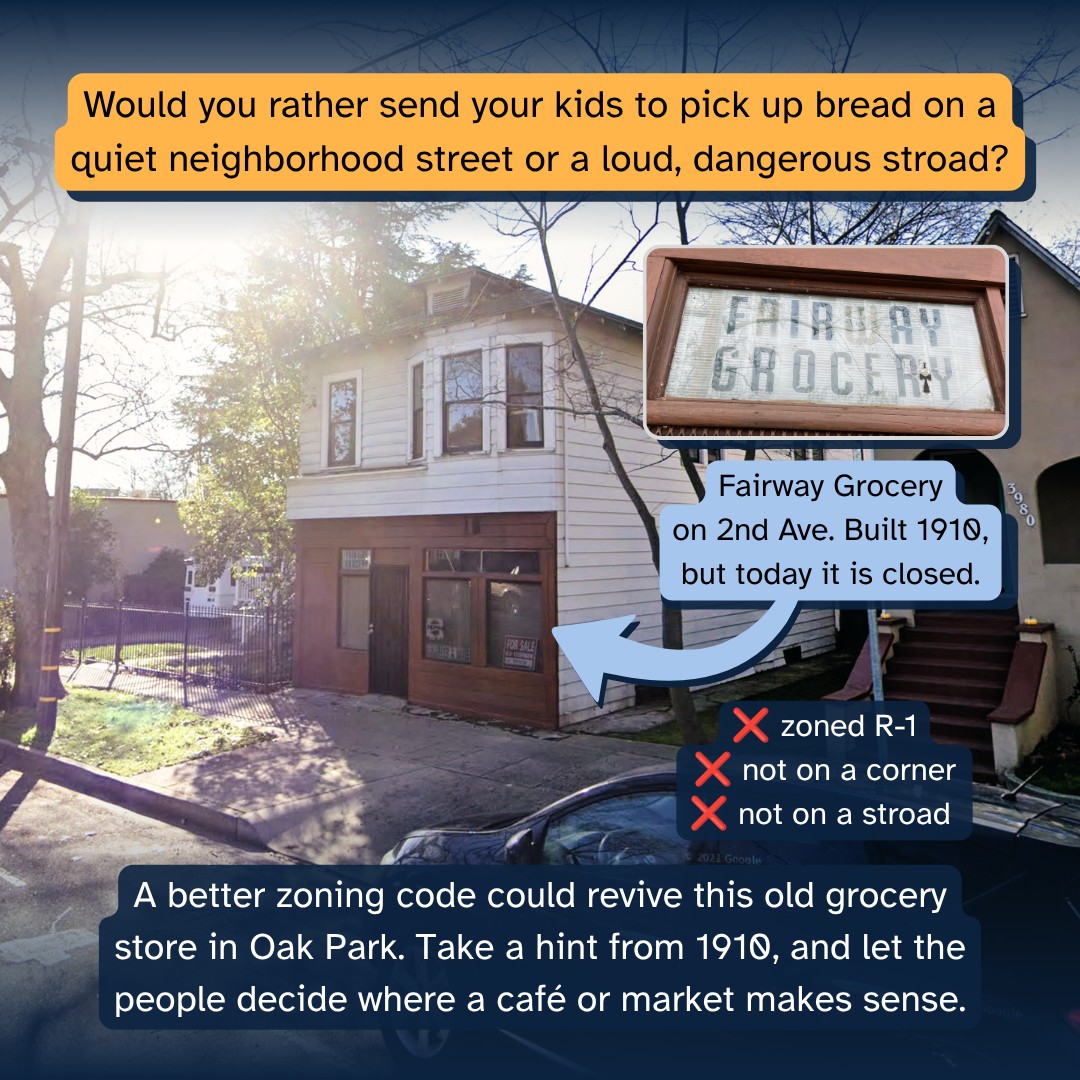
The city doesn’t actually need to predict where a café or market belongs. The market already does that. Restrictive zoning doesn’t prevent bad outcomes; it just blocks the good ones that would have emerged naturally. The better approach is to allow these neighborhood commercial uses broadly and let small, local entrepreneurs test what works. Some lots will get a café, but only the ones with sufficient foot traffic will survive. This trial-and-error feedback loop is a time-tested signal for where commerce works best, even in the most planned economies. A plan made for cars will continue to shape the city for cars, not people.
Go forth and public comment
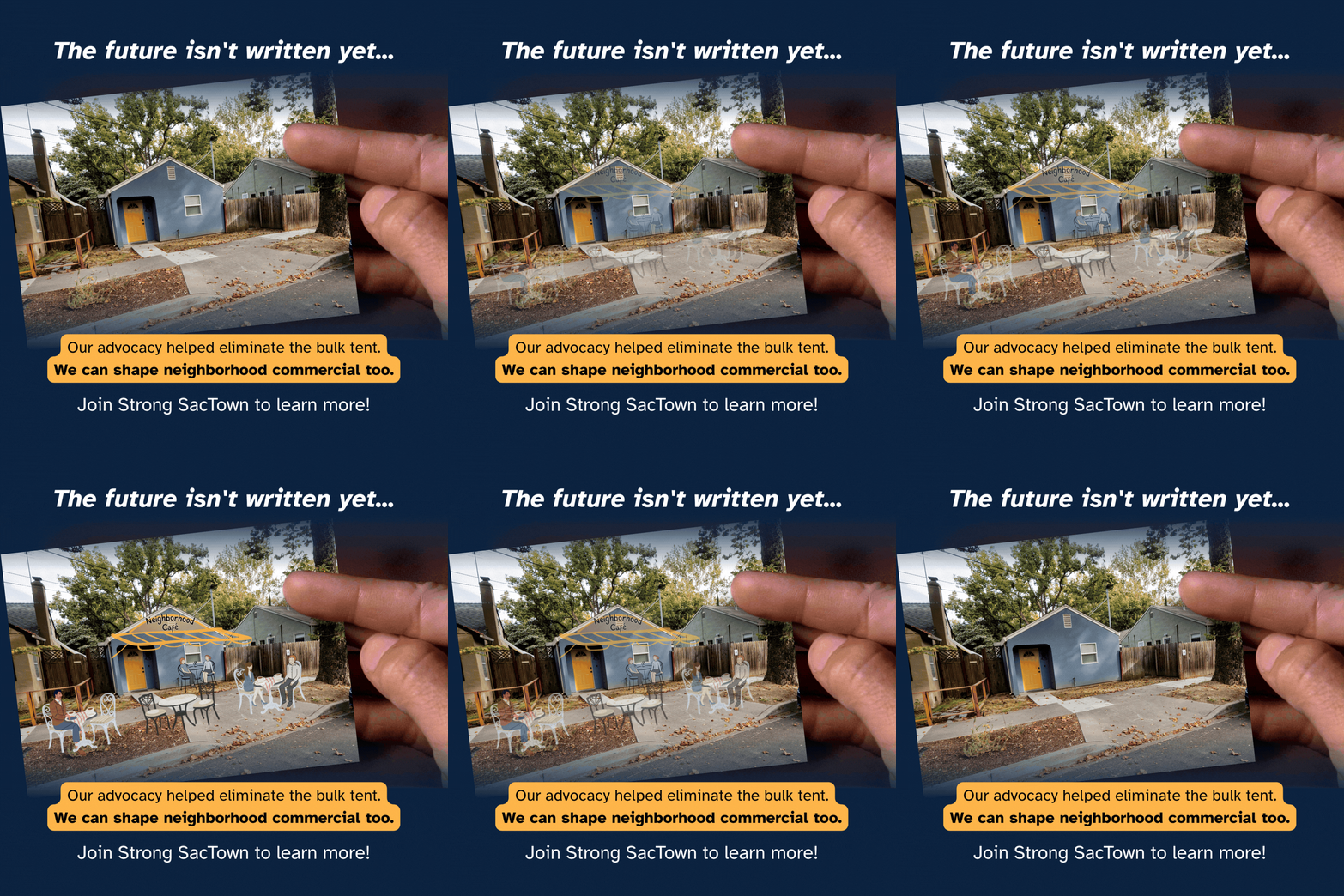
There will be several opportunities to give feedback on the draft zoning changes this summer, including online feedback through July, after which there will be several more months of commission and council meetings to establish the final version. There’s proof that we can make a difference: our advocacy helped eliminate parking mandates, single-family zoning, and now the bulk tent. We can also shape neighborhood commercial! Sacramento’s most beloved historic neighborhoods with their compact shops and walk-up apartments are slowly becoming legal to build again. Join Strong SacTown’s housing working group, and keep showing up at council and commission meetings!