
On November 10, Sacramento City Council approved an Enhanced Infrastructure Financing District (EIFD) to help build out the Railyards, a former rail yard just north of downtown that has sat largely vacant for decades. Its developer envisions a new neighborhood “doubling the size of downtown.” That takes a lot of City money to build all that public infrastructure like roads, sewers, and parks—money the City doesn’t actually have! An EIFD solves the chicken-and-egg problem by borrowing from future property-tax growth to build the infrastructure today. It’s a financial magic trick that rests on a critical assumption that every public investment will actually become financially productive.
Betting with public dollars happens all the time, but not always on the scale of one billion dollars. It’s such a big bet that on the day of the vote, Council turned down requests from community groups and unions for more affordable housing money and well-paying jobs, to avoid straining the project’s finances. We’re told there’s absolutely no wiggle room.
But there’s just one thing that Council and staff have overlooked. Let’s do the math on the Railyards garage.
The garage
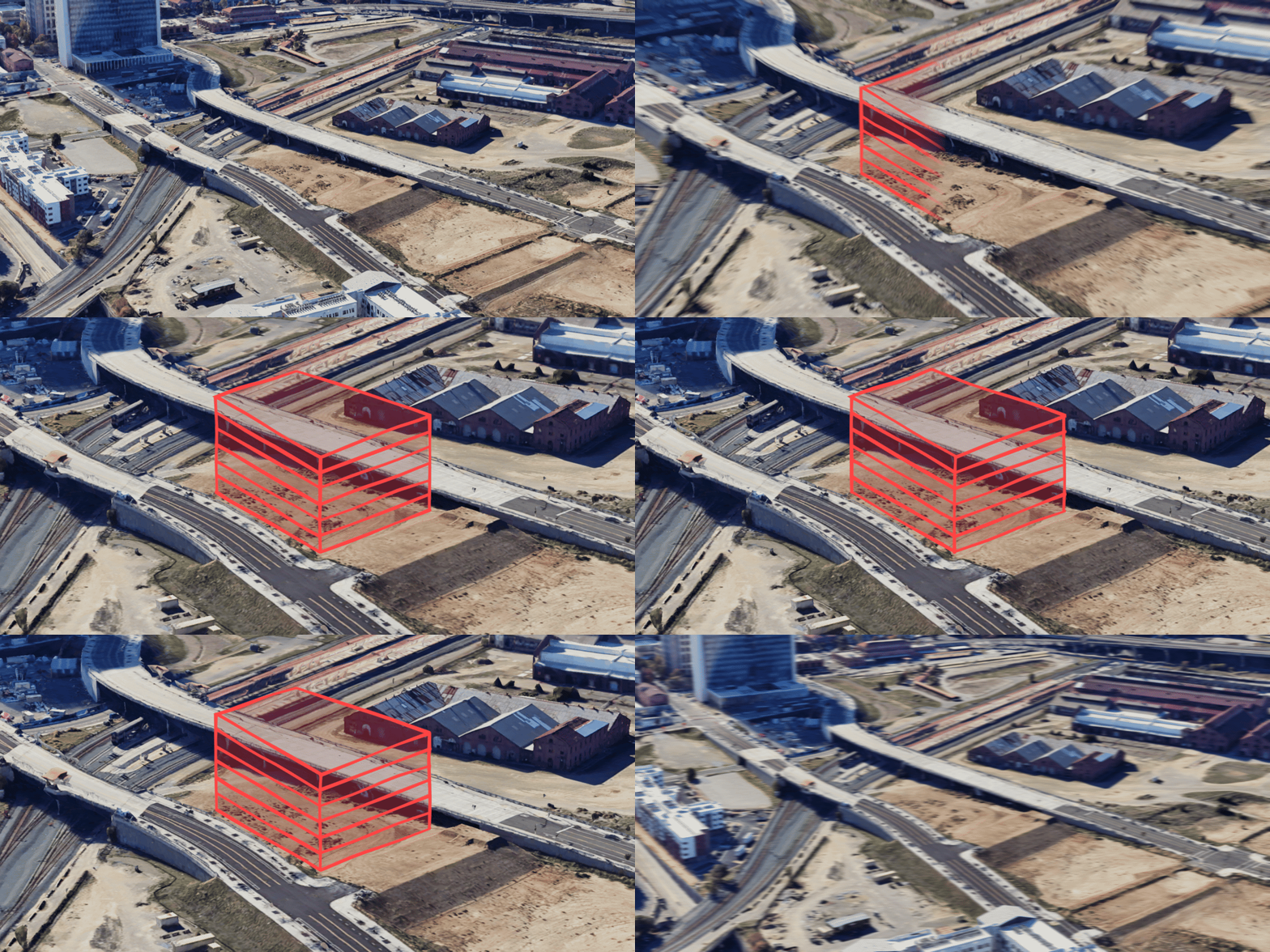
The approved EIFD assumes a 1,218-stall garage valued at $63 million, or $51,500 per stall to build. It would occupy at least one acre and most likely sit at 470 6th St.
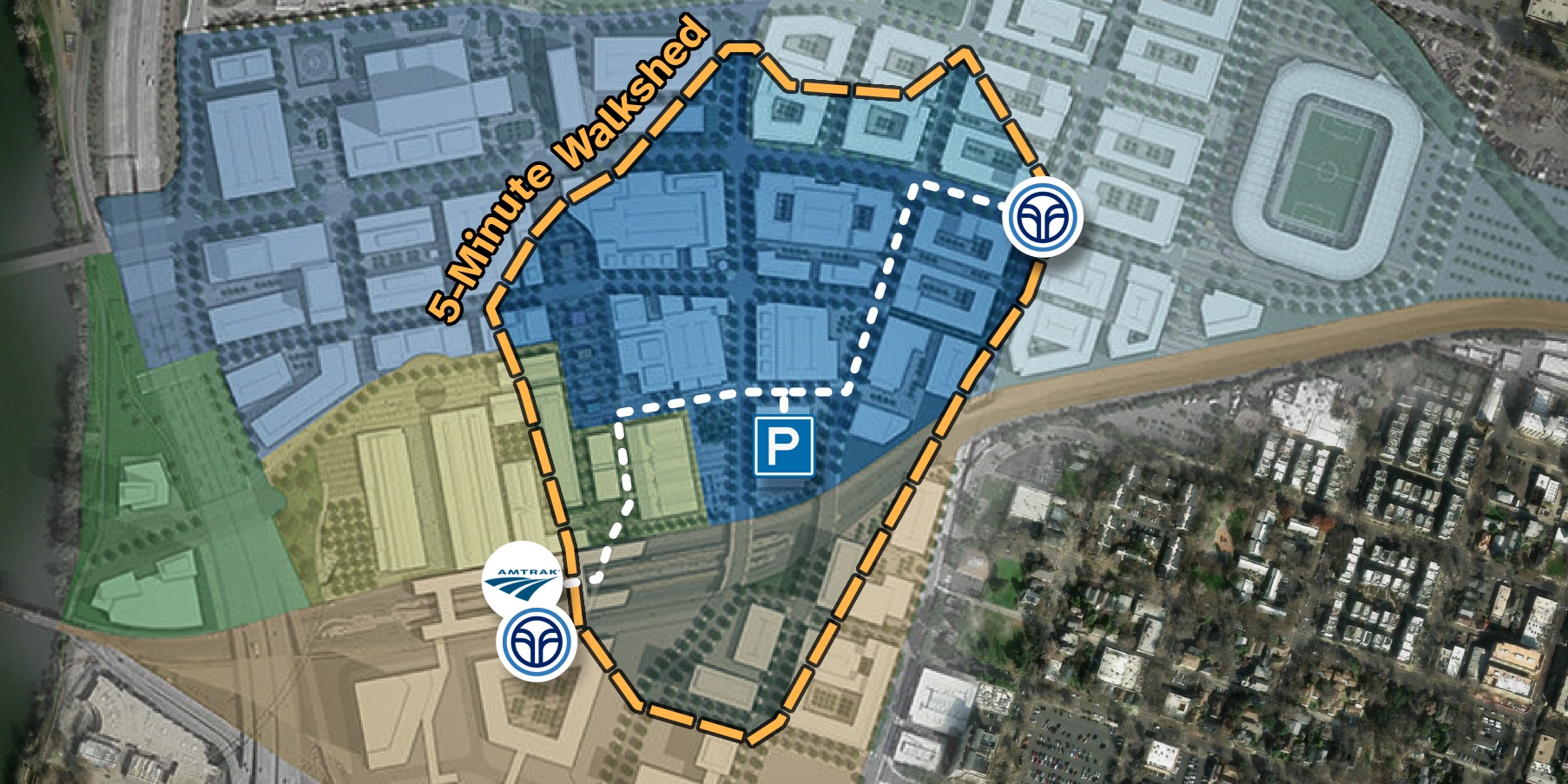
This location is directly adjacent to Downtown, and a 5-minute walk from two light rail stations, a major bus terminal, and an Amtrak train station. What happens on this property matters a lot, not least because its taxable land value would be off the charts.
During the November 2026 meeting, City staff said the “plan is not calling for a garage,” and they “haven’t committed a dollar amount.” Nevertheless, the EIFD allows a garage to be reimbursed, so taxpayers could still end up paying for one.
The “breaking even” distraction
The Mayor described the Railyards garage as something the City puts capital into “and makes money from” to “help pay for such capital in the first place”—in other words, it would break even. Let’s test that claim using the City’s own financial reports to estimate garage performance.
For a City-owned, EIFD-funded garage to pay for itself, each stall must earn:
- $143 a month to repay the $51,500 per-stall value over 30 years, and
- $134 a month for garage operations (basis: $12.7M in operational expenses on 7,933 stalls)
Each stall would need to bring in at least $277 a month, every month for 30 years. For comparison, in FY2025 the City collected only $193 a month per stall across City-owned and City-leased lots and garages ($18.4M in fees collected on 7,933 stalls). That’s a 30% shortfall. We could spend the next three decades struggling to make the garage break even, or we could turn our attention to better land uses that actually make a neighborhood more livable and more financially productive.
Homes and jobs are financial workhorses
What if housing were built instead? The EIFD values apartment units at about $400,000 each, so a modest, privately funded 150-unit building would pay roughly $150,000 a year in property taxes into the EIFD instead of drawing from it. That’s steady revenue and fewer maintenance liabilities for the City. Meanwhile, schools and County services would rake in another $450K a year, and ground-floor shops would add sales and business taxes. Everybody wins.
Unaccounted costs of parking

Subsidized parking invites more driving and more traffic. The typical U.S. driver already loses 49 hours a year to congestion, a time tax that hits hardest those who have no choice but to drive. The plan budgets $6.8 million to widen 7th Street for the extra cars, but every added lane is a permanent maintenance obligation for a City that already can’t keep up with road repairs. Expect more potholes.
More traffic also means more crashes. Between 2015 and 2024, 22,538 crashes injured or killed someone on Sacramento’s streets—about six a day. Every crash is a tragedy, but it also hurts the City’s budget: the Fire Department averages $1,560 per 911 incident, ambulances are already stuck waiting at crowded ERs, and dangerous streets invite lawsuits like the $11 million Sacramento paid after a 2018 crosswalk death. Even your electric bill pays: SMUD replaces a power pole about every other day after a crash, at about $15,000 each, and utility crashes cut power to 126,989 customers in 2025.
More traffic also means more noise and air pollution, which the City’s own General Plan notes fall hardest on neighborhoods beside busy roads.
So how can we quantify all of these unaccounted costs? The Victoria Transport Policy Institute estimates each rush-hour car commute imposes about 62¢ a mile (adjusted for inflation) in congestion, crashes, road wear, and pollution that drivers make everybody else pay. If the garage converts just 300 would-be transit riders, carpoolers, bikers, or walkers into solo drivers commuting a conservative 4,000 miles a year, that’s a $35M public burden over 30 years, as those costs rise with inflation.
Garage scorecard
Let’s tally it all up:
| ✅ Benefits (30y) | ❌ Costs (30y) |
|---|---|
| $134M in parking fees (based on FY2025 parking fund revenues, with rates rising 3% a year). | • $63M in EIFD reimbursements. • $93M in operational costs (starting at FY2025’s $134 per stall per month, with costs rising 3% a year). • $6.8M to widen 7th Street. • $35M in traffic, crash, road wear, pollution, and other driving costs. |
| Total: $134M | Total: $198M |
A $64M net loss caused by financing one parking garage is a bad deal.
By contrast, a privately built 150-unit building on the same acre would be at least a $21M net benefit over the same 30 years. That’s an $86M improvement. You can check our math in this spreadsheet.
When even public housing is cheaper
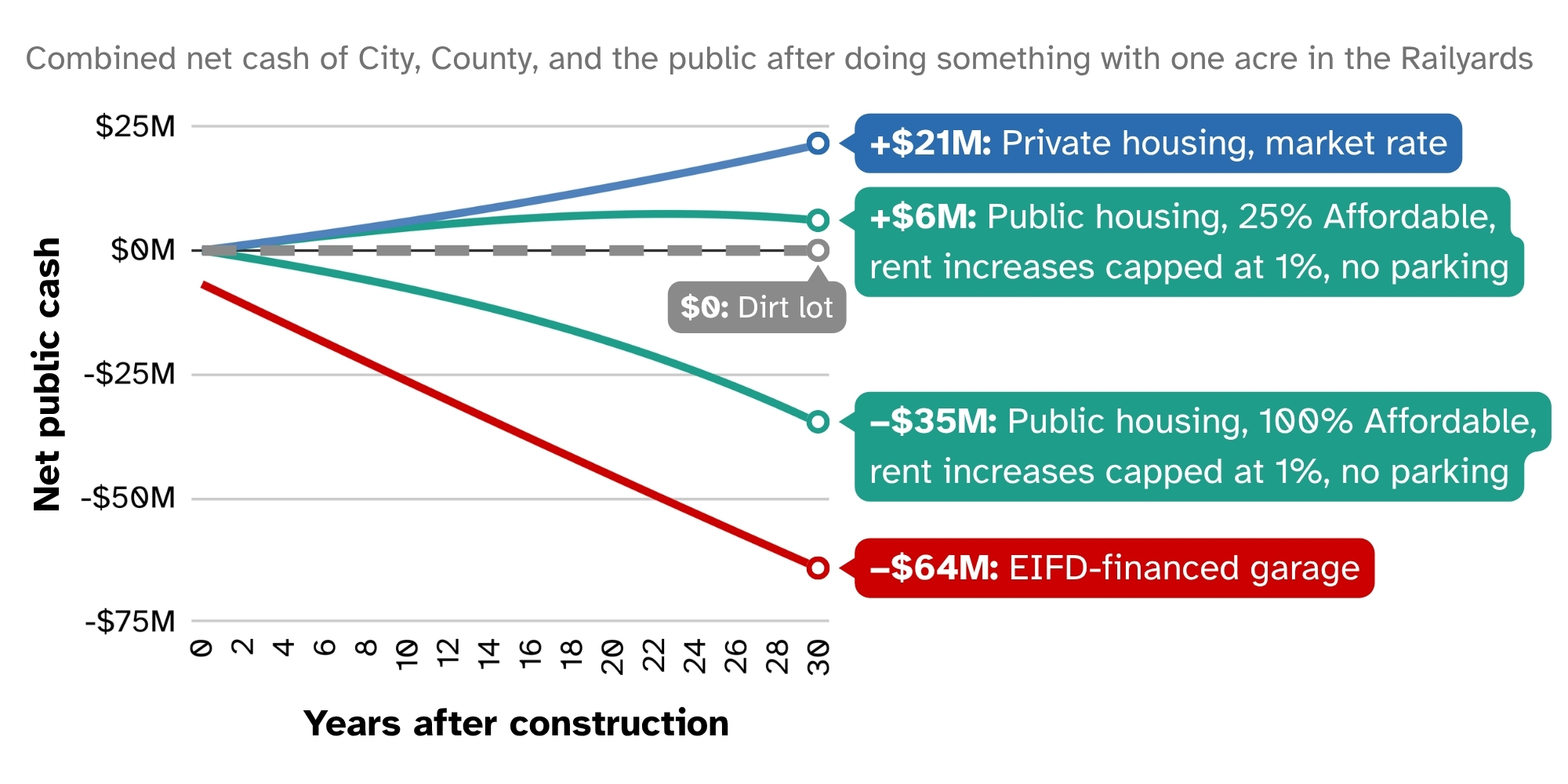
A garage in this location squanders so much financial opportunity that even public housing is cheaper. A 100% affordable (to 80% AMI), 172-unit, City-owned, SHRA-managed, EIFD-financed apartment building with no parking and rent increases capped at 1% a year would be $29 million cheaper than the garage (after 30 years). If only a quarter of the units were affordable, the building would actually net the public +$6 million. The City, County, schools, and the general public would all come out ahead, in addition to making a substantial dent in the housing crisis.
Make small bets instead
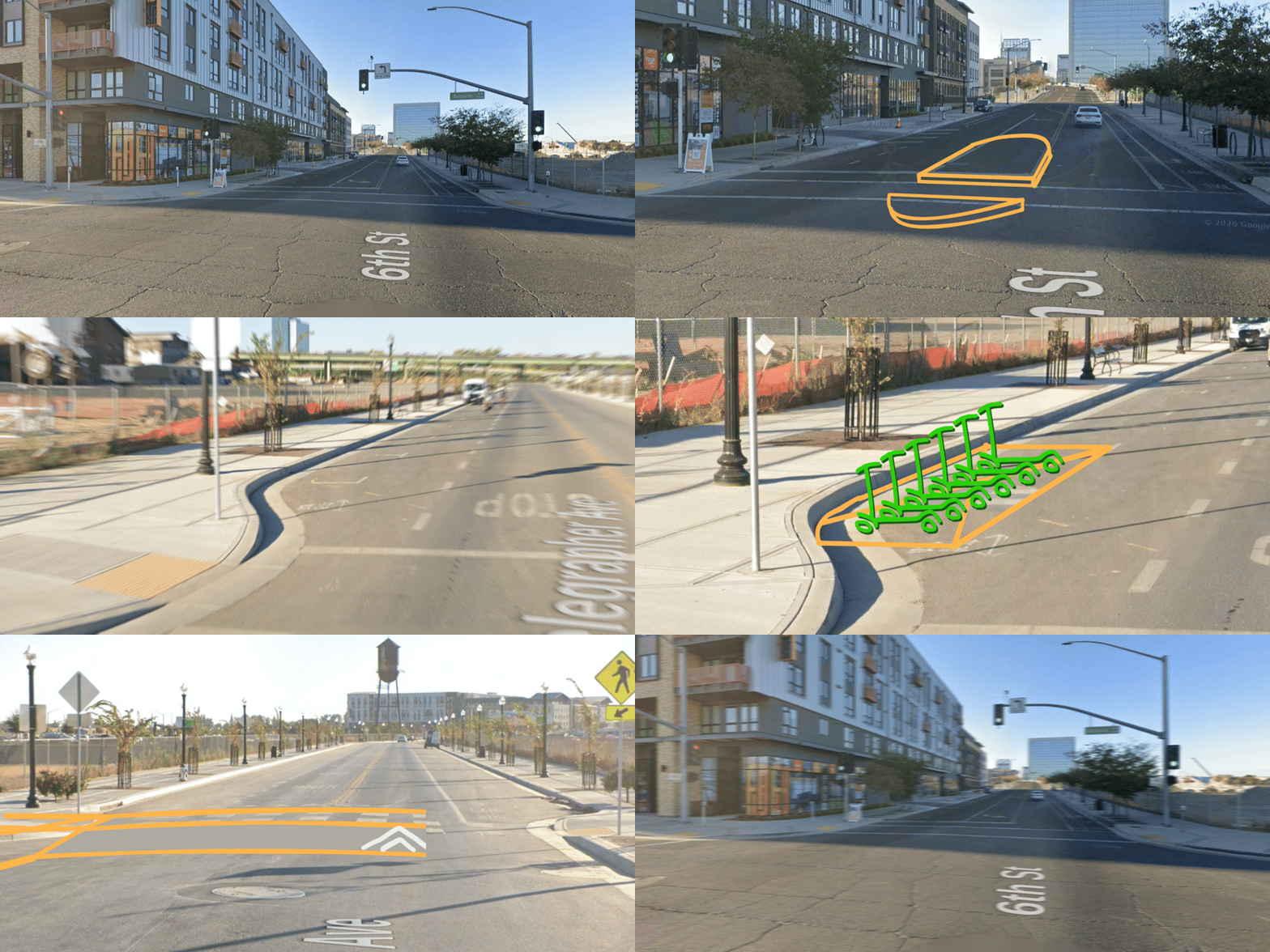
Strong Towns urges cities to make many small bets instead of a few big ones: if a small bet fails, little is lost, but successful ones can be easily repeated. Traffic circles, floating bus stops, designated scooter parking, raised crosswalks, and median refuge islands would make the neighborhood safer, calmer, and cheaper to get around—even for drivers. Each costs a fraction of the garage, so the City can try one, see if it works, and repeat it elsewhere.
Improving the walk to and from nearby transit stations is a smart use of EIFD dollars because transit is a wealth multiplier when it connects productive places conveniently. Every trip made by train or bus instead of by car frees up land for housing and reduces congestion, so each acre near a station creates more wealth and pays more in taxes.
That’s a good deal.
End parking subsidies!
We’re not against drivers or parking; we’re against public subsidy for parking. If the developer believes a garage will be profitable, they’re free to build it on their own dime. But public EIFD dollars should be dedicated to building a financially productive neighborhood with more jobs, more housing, and less traffic!
Getting there starts with amending the EIFD so it can’t pay for parking.